One evening, Hanin's neighbors came to her house in Idlib (northern Syria); congratulating her on her release from the prison where she had spent four years. Curiosity was jumping from their eyes, as she noticed, and they could no longer control it until one of them released it by asking:

"Did they do something to you?"


"All forms of torture and the worst words. They slapped me several times a day, then threw me into solitary confinement among insects for days."


This is how Hanin responded, to find a mixture of gloom and confusion on their faces, as if they were waiting for something else.. They repeated: "So they didn't do anything to you?!"


"Oh God.. All of this is nothing?" "Hanin" answers them without thinking, then quickly she picks up on their intention, which is rape.


She is silent for a few moments, saying to herself: "As if all the suffering doesn’t matter!" Then she simply denies them that. But she feels that her answer is met with disbelief and silence; a silence whose meaning she learned over the following days.

Hundreds of kilometers away, in the city of Sednayah, Sham lies on a hospital bed, receiving both physical and psychological treatment. Bruises and burns are scattered all over her body. But those scars didn’t hurt her as much as the look she saw in her father’s eyes after the doctor told him what had happened to her.

During the same period, Amal arrived alone at a small rented house, where her family had decided to move in, only to find herself far away from them once again, and "in a new isolation in a strange country."

"Hanin", "Sham", and "Amal"... three women freed from Syrian prisons. At that moment, they realized that another fate awaited them outside the prison walls, one that seemed to be no less cruel, if not worse and longer lasting.


"Maybe she will survive, but she will never be the same again,"
Said Ward Furati, author of the book Survivors.


Haneen (33 years old) stepped outside the iron gate of Mezzeh Prison, never expecting to cross it alive again. She was stunned, like everyone else, amidst the chaos, running, loud, and overlapping voices calling: "Bashar has fallen! Get out! Go wherever you want!"

For Syrians, who lived under the rule of "Assad" father and son for nearly 50 years, the impact of this news was neither reasonable nor logical at all.

On the side of the road, Hanin took a taxi with other women like her who had just left prison, heading to the nearest point where she could take another bus to her city. The car set off, and its driver kept telling them about how Bashar had escaped in the blink of an eye! That the armed opposition had taken over one city after another on the road to Damascus, and that no one understood what awaited Syria.


Then he asks them questions about the prison, their charges, and what happened to them?


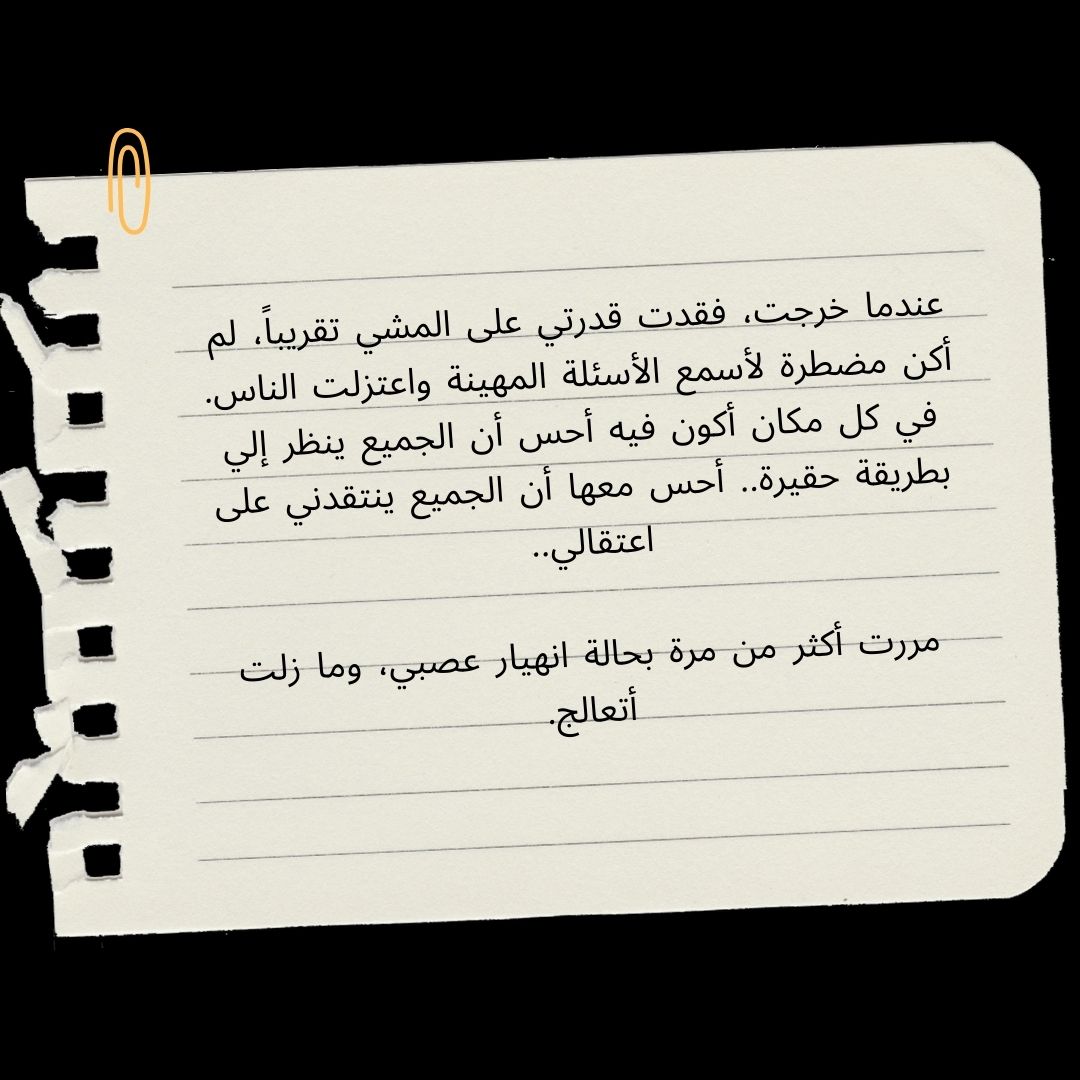
Hanin did not say a single word. She was staring at the roads and the people out in the streets that were passing through them in celebration, and at those people who were tearing up pictures of Assad everywhere; as if she had been absent for decades and not just four years.

Then she leaves those with her until she gets on another bus heading to Idlib, which she finds after much trouble and is crowded due to the imminent 13-hour curfew in the capital.

On her way north, Hanin's bus passes Sednaya prison, whose surroundings are even more noisy and crowded. Meanwhile, Sham (28 years old) was leaving from its red building, struggling on her legs to walk. She cannot believe that she is leaving that building about which all the scary stories are woven and from which only a few come out alive.

But she was unable to continue walking until she got into a car and fell unconscious, and was taken to the nearest hospital without any papers or anything to indicate her identity.

For this reason, one of the hospital employees posted pictures of her on Facebook groups, including those of the missing in Sednaya prison, hoping that her family would reach her.

About 25 km away, Amal (45 years old) was seeing the light outside Adra prison. “Even the air was different,” she described in the first words she uttered to those around her. Before that, she was only a few steps away from the death sentence, according to the news she received about the next trial two days later.

She ran quickly, as if she was escaping, until she boarded a bus bound for Deir ez-Zor (eastern Syria). She was eager to meet her husband and children and imagined their faces when they grew up. None of them had visited her since her arrest in 2014. She thought they did not know where she was.

But she had a four-hour journey ahead of her, which was enough time to contemplate the changed roads and destroyed buildings, and imagine how many demonstrations had taken place, massacres had been committed, and families had fled across the country. At the same time, it forced her to recall everything she had experienced.


Hanin does the same thing and takes her memory back by bus four years, to that “black” day, as she describes it, when four tall, broad-shouldered men raided her house at 2 a.m. to take her away. Her husband wasn’t there, but her mother and sisters were, unable to do anything but cry.

She begged them to at least put on her prayer dress. She pulled it on and closed the room for her sleeping four-year-old son. Then she left with them.

In a classic scene, two men placed her in the middle between them in the back seat of a car. Then they covered her face with a black scarf and tied her hands. A series of insults began until they arrived at the “security branch.” Before she could understand what she was accused of, she was photographed and given a "number."

This number was not just for registration, but a distinctive mark for each prisoner; she would be known by it throughout her stay, it would become her identity and name.

She took her number to a solitary confinement cell. Inside that narrow cell with its gray walls, there was a mixture of insects. And inside "Hanin", there was a mixture of fear and confusion: what charge could a woman like her, who had nothing to do with politics and worked in a plastics factory, commit?!

In this disturbed state, she remained for another five days until the investigator sitting behind a worn-out desk called her. He began his interrogation with her with a lot of insults and beatings, accompanied by a word that is usually heard in movies in similar situations: "Confess... Confess."

Only then she did know that they wanted her to confess "that her husband, who works in car repair, cooperates with armed factions and set up an ambush for the regular forces, and she even participated in that."

While Sham remains unconscious and unable to remember her past like "Hanin", she gradually began to regain consciousness in Saydnaya Hospital. She doesn't realize where she is or how she got there.

The last thing she remembers is armed men banging on the cell doors, telling them to come out and say 'Allah Akbar.' She thought it was a trick and that they would take them out and execute them. For seven years, she had prepared herself that 'whoever enters Saydnaya Prison is lost forever.

Therefore, she cannot realize that she is still alive and that Bashar al-Assad has fallen, and everything that happened to her in that terrifying building. The day she was stopped at a security checkpoint in Damascus on her way to college, her life and dreams also stopped.

When men in black clothes appeared in front of her:

"Let’s go."


"Where?"


"To the branch!" (*The branch means the security headquarters)

That's how the conversation went, without details.

"Sham" had no deep involvement in politics, only shares and photos on social media, which may have led her to one security branch after another until she ended up in Saydnaya, the most notorious of all Syrian prisons, and perhaps the world, under a label that accompanies most of its inhabitants: "Terrorist acts and cooperation with foreign organizations.

She walked through gloomy and desolate corridors, with the smell of death permeating every corner. She entered interrogation after interrogation, and with each one, the marks of burns and electric shocks increased on her body. Amidst explanations repeated by the interrogators about 'how she and her like are more dangerous to them than those who call themselves rebels or fighters, because they are among them and they didn't know they were terrorists,' as they described it.

One evening, a different kind of torture awaited her.

A guard led her to a different room, dimly lit, with iron chains hanging on the walls on both sides, and long whips on the desk where the interrogator sat. The smell of alcohol emanating from him reached her as he asked her to sit for the first time on the chair opposite him.

Then he put his hand on her, and the blood froze in her veins, and her tears flowed.

Amal's tears also fall without her realizing she's on a bus surrounded by people. She's overwhelmed with a flood of emotions, between the joy of returning to Deir ez-Zur to see her family again and the deep pain left behind by her days in Adra Prison.

Her life before that was 'normal', dreaming only of living well with her husband, and raising her children.

As a teacher, she was aware of the situation shrouded in a general rule among Syrians: 'Walls have ears.'

She never expected a revolution to reach Syria; it seemed it was in another world. When it happened, she was certain: 'Nothing will change!' But she couldn't resist her curiosity. She observed the demonstrations—hiding her face behind a veil—then her curiosity turned to shock when bullets responded to the chants. As days passed, the bullets turned into tanks, planes, and rockets. The demonstrators took up arms, and the city was divided in half: one liberated, almost empty, and destroyed, and the other under the regime's control, packed with people who feared bombing. Amal's house was in the Qusour neighborhood, belonging to the second half.

During those turbulent days, she only went out to sign in at school to receive her salary and returned through dividing security checkpoints, amidst a mix of sounds: vendors haggling over scraps of their goods that barely reached their area, the hum of a few generators providing electricity for two hours a day to those who could afford it, and the sounds of clashes and rockets pounding the other side.

When things worsened, she and her family were displaced from Deir ez-Zur to Raqqa, then to the Aleppo countryside, and then to Turkey. They spent seven months there before returning to their city with an idea she describes as 'stupid,' believing that things had calmed down, to reduce expenses, and for her son to attend university there.

But they found ISIS welcoming them and controlling the other side of the city. She decided to leave once and for all to Turkey, an idea her husband opposed. She insisted and prepared her plan: she resigned, obtained her son's papers to continue his studies abroad, arranged with her relative there to secure her return and accommodation in a rented house, and most importantly, applied for a new passport because she had disposed of the old one due to an entry stamp on it, which at that time meant 'potential suspicion of its holder!'

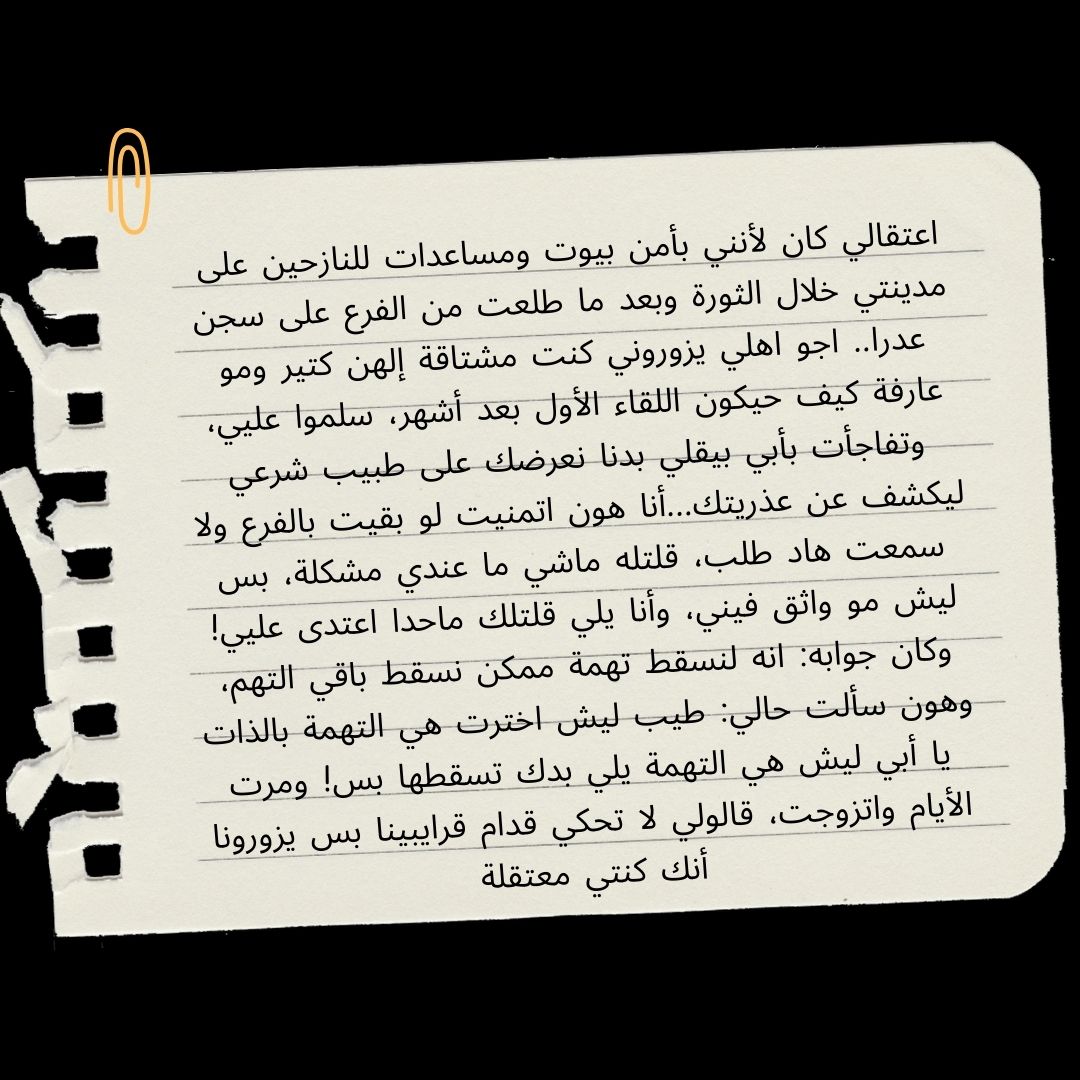
When she went to collect her last salary, a large man surprised her and told her she had to go with them for a simple interrogation regarding the passport application: 'Just a few questions and answers, don't worry,' he said with a perfectly normal and calm expression.

She turned to her friend and slipped her phone and the money into her bag. Then she whispered to her to inform her family.

The interrogator asked her about her family members' names, ages, occupations, etc. With each question, she became more certain that the matter was not about her passport. After two hours, he called a guard to take her 'downstairs.

She didn't know the meaning of 'downstairs,' whether it meant a ground floor or a 'tomb,' as she had heard about such these buildings. But she discovered it was a room on the ground floor. She later realized that it belonged to the chief interrogator, a short man with sharp features, and “Alawi” (from the minority sect with the most influence).

He put his feet up on a chair and asked her:

- 'Tell us what you were doing in Turkey?'


- 'I wasn't in Turkey.'


- 'What were you smuggling from Turkey to the militants?'


-'Sir, I swear I neither went to Turkey nor saw Turkey!'


As for the other interrogator standing in front of “Hanin”, he kicked her, throwing her to the ground, and she nearly lost consciousness when she refused to confess what he dictated about herself and her husband.

Then the interrogations and torture followed until she finally confessed that “her husband was cooperating with terrorists and that they had set up an ambush for the Syrian army forces”

This was not enough for them, but the confession also included her brothers, and they were arrested.

'Hanin' had never cried as much as she did that day. She later realized that her brothers had arrived at the same prison and that they were separated by only a few walls.

Perhaps the screams that penetrated her ears every day were the voice of one of them.

She remained in 'solitary confinement,' as they call it, in a space of one meter by one meter, surrounded by darkness, which she became accustomed to and could see in it as bats do.

She remained there for a month and a half, then was transferred to Adra Prison to attend her trial there, which ended with a ten-month sentence. After the release order was issued, the shock came when they told her, 'You're going back to the branch.'

She returned to Mezzeh Prison, a return whose meaning she realized from prisoners: 'Those who return from Adra are forgotten.' “Hanin” was forgotten for another three years, during which the constant thing was 'torture,' which she became convinced was 'torture for the sake of torture and amusement,' as she told those with her, her voice filled with terror. She held her breath every time she was summoned, fearing rape, as she heard about others.

That was Sham's fate when the interrogator closed the door and then 'did to her what he pleased.' She surrendered, 'as if she no longer had the energy to resist or was certain that it was futile.'

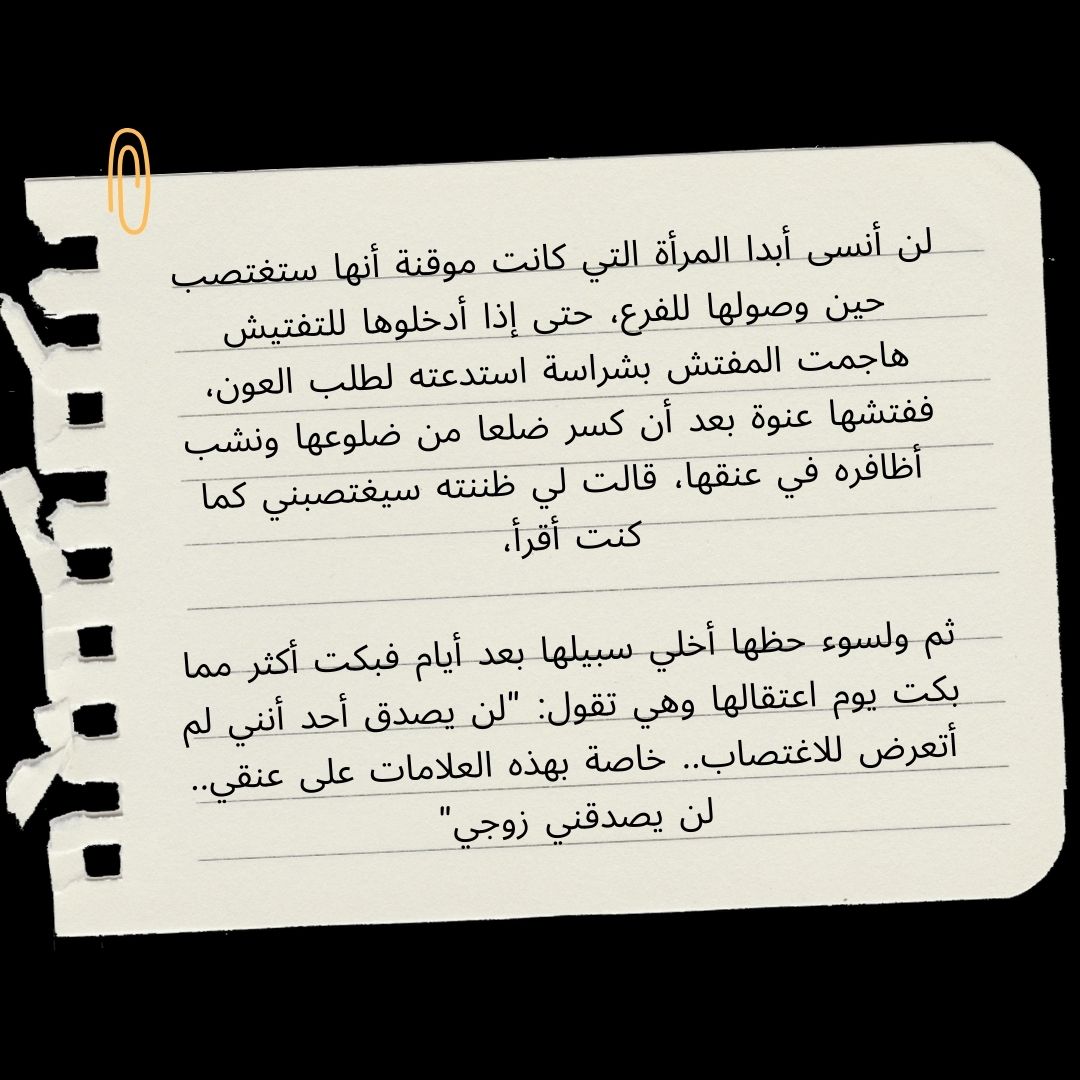
She simply closed her eyes and her mind chose to stop, 'hoping her memory wouldn't record his image.' She left his office trembling, trying to hide what her eyes revealed from the cell inmates. She 'feared their pity and becoming a story they would circulate.' The act was repeated a second and third time by others, and her body completely collapsed. She didn't know she was pregnant until she bled and the child fell, whose 'father she wasn't sure which one was.

While this was happening to her, her family continued to pay bribes, hoping someone told them where she was or whether she was even alive. But they didn't know for years until they saw her pictures on social media groups after a hospital employee posted them. They recognized her face with difficulty, as her features had completely changed. ‘Sham” was surprised when they entered her hospital room, interrupting her bad thoughts. Their tears mingled together.

While Amal was not concerned about anything happening on the bus route, whatever it was, nor even the conversations the passengers were having, she continued to remember, 'feeling a small victory in remembering it while being far away from it.'

When she insisted on denying going to Turkey, the interrogator called a guard who led her to other stairs downstairs, where 'a woman more like a ghost than a female,' inspected her. They proceeded through a long, dark corridor, with rows of cells on both sides, until they reached the door of her cell with seven other girls in a square room.

Her unspoken thought at that moment, as she looked at the faces, was: 'Are these the ones Facebook pages talk about?' She didn't sleep on many nights, nor did she eat on many others, the usual meal: tomato pieces, boiled potatoes, a small plate of jam, and a little bread.

She spoke only a little with the cell inmates about their shared problems, which never made prison life monotonous or boring: cold bathroom water, fighting lice, primitive means of stopping menstruation.


Hanin's bus arrived in Idlib, a city ruled by Hay'at Tahrir al-Sham, the leading opposition faction that overthrew the Assad regime and whose leader, Ahmed al-Shara, ascended to power.

"Hanin" took the road to her house. Its features hadn't changed much, except for slogans and banners indicating recent protests against “Al-Shara” and Hay'at Tahrir al-Sham, due to 'tax policies and security repression.

"Hanin" doesn't know the details behind this; she hasn't heard about the economic inflation and high unemployment rates in Idlib, and of course, her family is suffering from it.

Her heart raced as she knocked on the door of the house, before embracing her mother and her two brothers who were released by an amnesty decree before her. Meanwhile, her son stood in the corner, not recognizing this woman! He was now 8 years old.


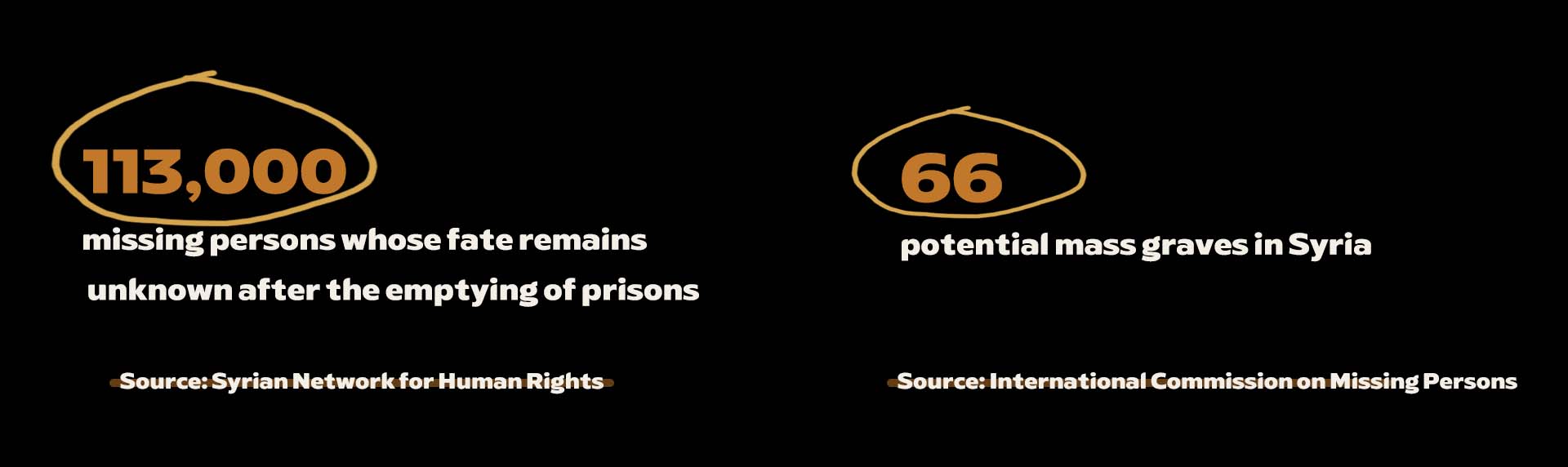
While her husband's fate remains unknown, “Hanin” tells her family, 'I don't know if he was arrested and died in prison or not, and in this state, whether I am married or not!' The fate of Hanin's husband was considered by Mirjana Spoljaric (President of the International Committee of the Red Cross) 'a tremendous challenge that will require years' after the opening of prisons and the discovery of mass graves.

In the following days, visitors knocked on her door, carrying with them many questions and inquiries about what happened inside the prison walls, all pointing to the same meaning: 'You were a prisoner? Hmm, what happened, did this happen or not?!'

"Hanin" says away from them: 'Even if I said no, they wouldn't believe me!' She then understood the meaning of the silence that greeted her words when she denied being raped, from the side comments she heard: 'I mean, if they did something to her, would she say? Of course not!'

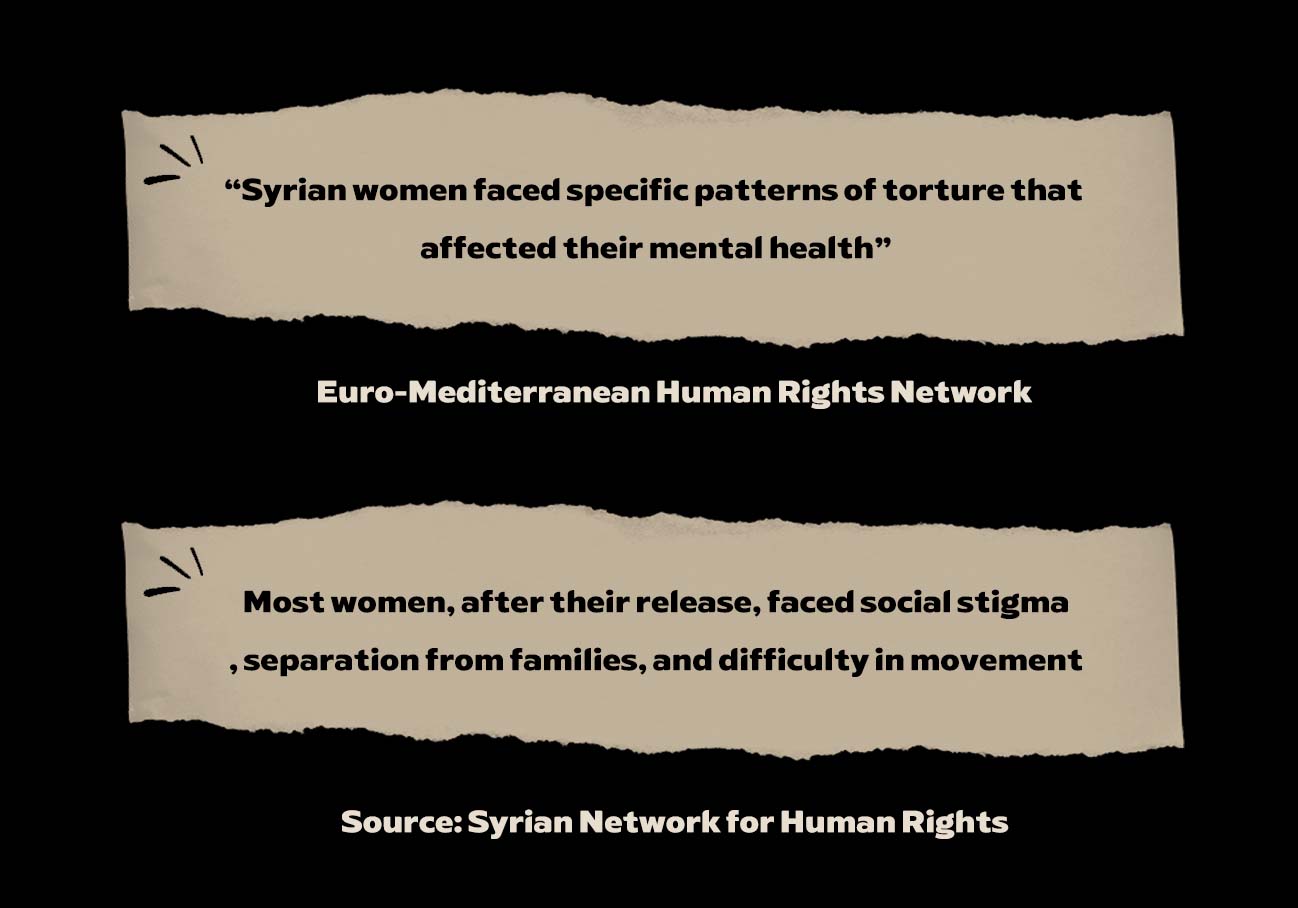
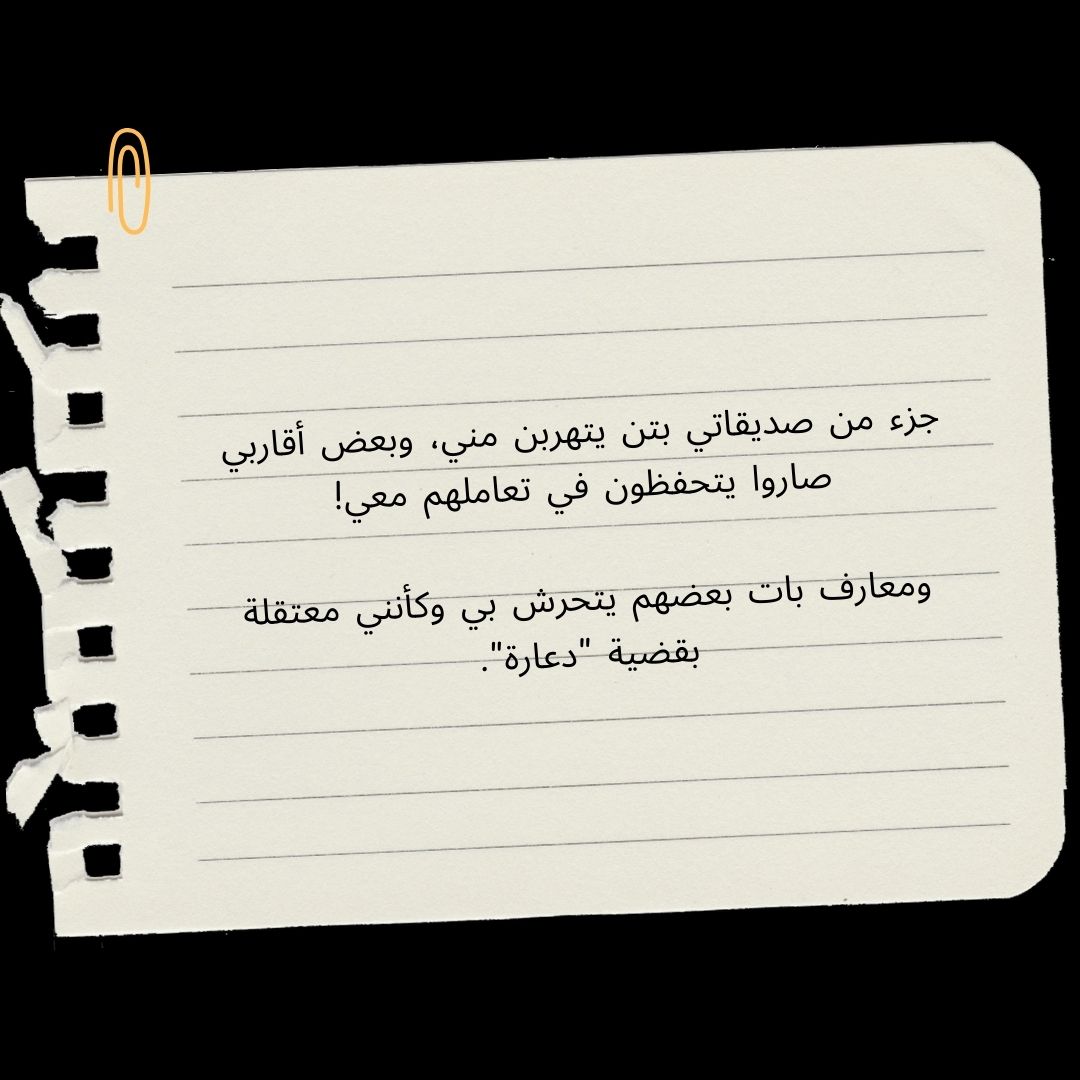
She found in their conversations a different version of Idlib than the one she knew and left, specifically in people's view of women, even if they were detainees. As Hala Hazza (director of Survivors of Syria organization) sees it: 'There is a percentage of people who have become accepting of female detainees because they believe in the revolution. But there is another, not small, percentage that rejects the survivors or at least subjects them to embarrassing and offensive questions.

"Hanin" realized at that moment that she couldn't live in the same area and couldn't return to work. So she began spending her days planning to arrange to change her residence as soon as possible.

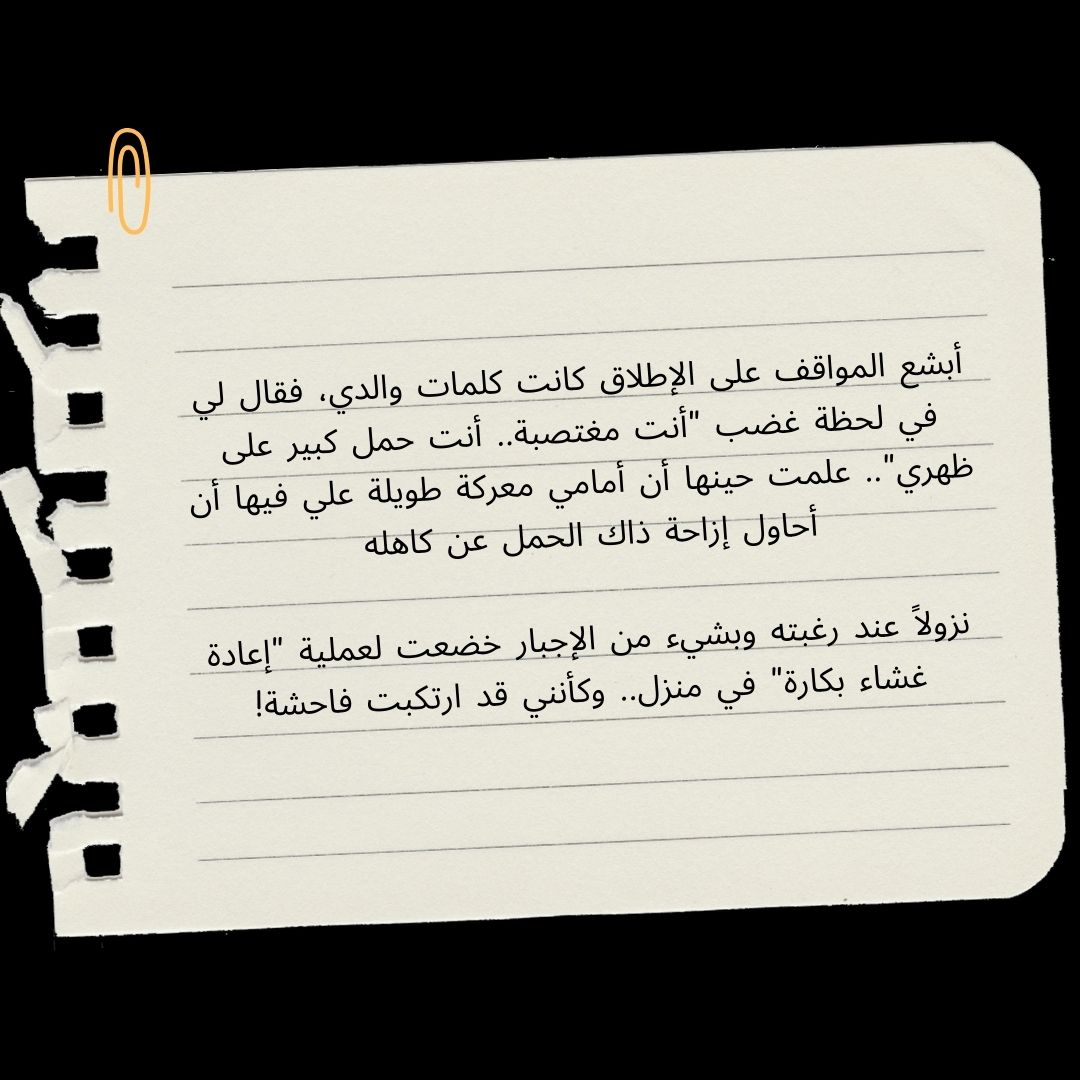
As for the look to ‘Sham” in the hospital, it was much harsher, because it was closer. It was launched like an arrow from her father when he knew from the medical examination that 'she had been raped, subjected to multiple abuses, and had a miscarriage.' A look she describes as 'a look of brokenness she had never known before,' and around her, there were many talks that spread through the room:

'We'll hide the matter, what do you think about performing a hymen reconstruction operation at a doctor's house after the treatment is finished?'

What reached Sham's ears was 'like a dagger in her chest,' as she says. But she didn't argue with them, she didn't refuse or accept anything that was said. She left the hospital and began psychological therapy sessions. For the most time, she didn't speak except to Milana Zein (her psychologist), who says that she is 'out of touch with herself and her body, suffering like the others from depression and chronic post-traumatic stress disorder, and talking all the time about her loss and the loss of her future.

' Milana has been working with survivors even before the fall of the Assad regime, which subjected her to detention, interrogation, and writing pledges 'not to deal with terrorists,' but she 'did not abide by them,' as she says, and continued her work in secret.


Amal's bus reached Deir ez-Zur, with the Euphrates River on both sides. It seemed more strange to her than it should have been after ten years. But these weren't just any ten years! The city fell under the control of the Islamic State (ISIS) in the same year she was arrested, before the Syrian Democratic Forces (SDF) expelled them in 2017. She sees their members and patrols spread everywhere.

These forces would later withdraw and be replaced by the opposition's military operations administration.

All of this made the city receive “Amal” with tension and turmoil. This didn't subside when she reached her house; it only increased. Her family greeted her with a 'lukewarm' reception, as she described it.

She quickly understood from their conversations that they 'didn't want her presence and blamed her for what happened when she intended to go to Turkey alone, against her husband's wishes, and that she should leave now.'

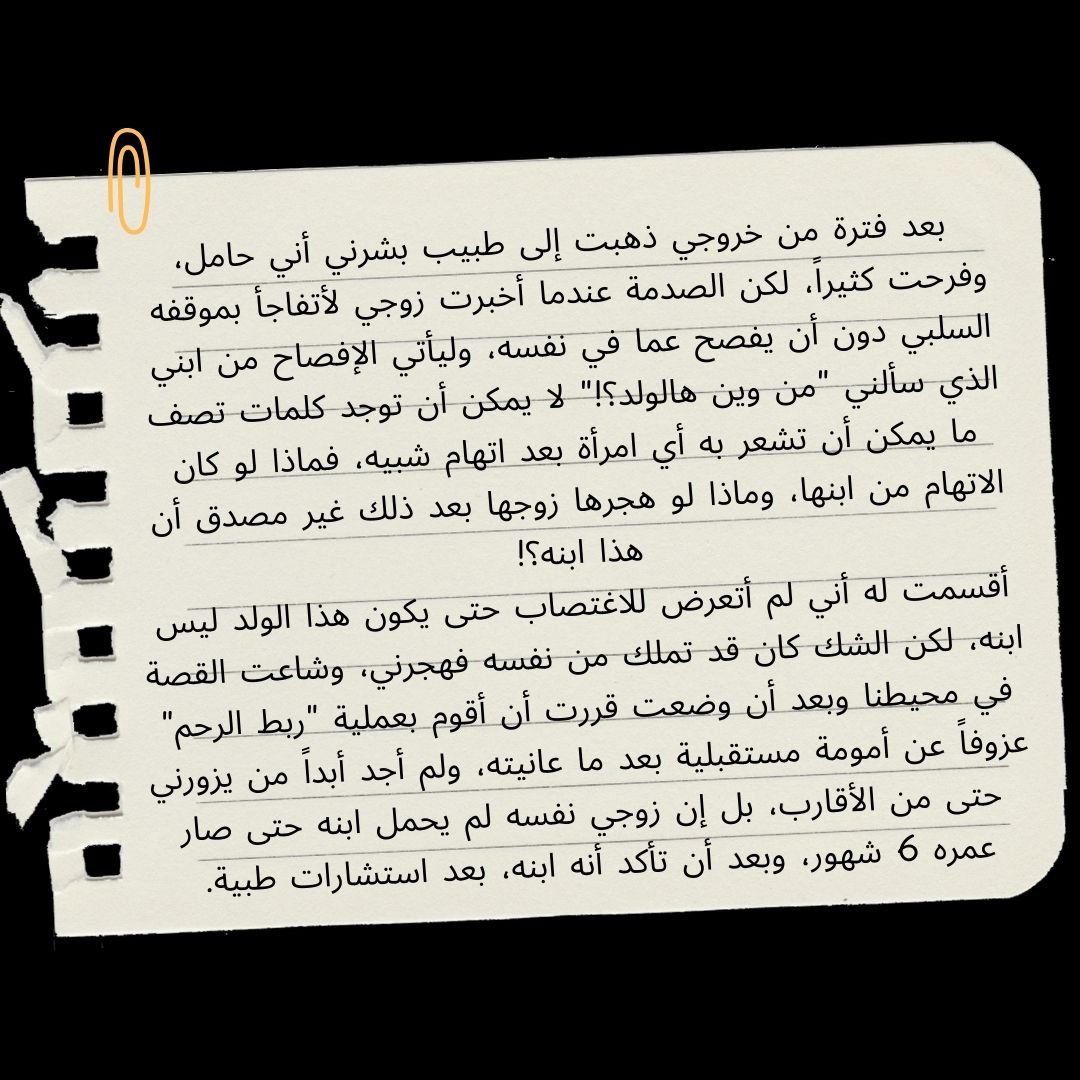
Her husband even said it explicitly: 'They defiled you in prison.'

Something worked inside her like air on fire, fueling it until it blazed: 'I wished I could die or return to prison again.

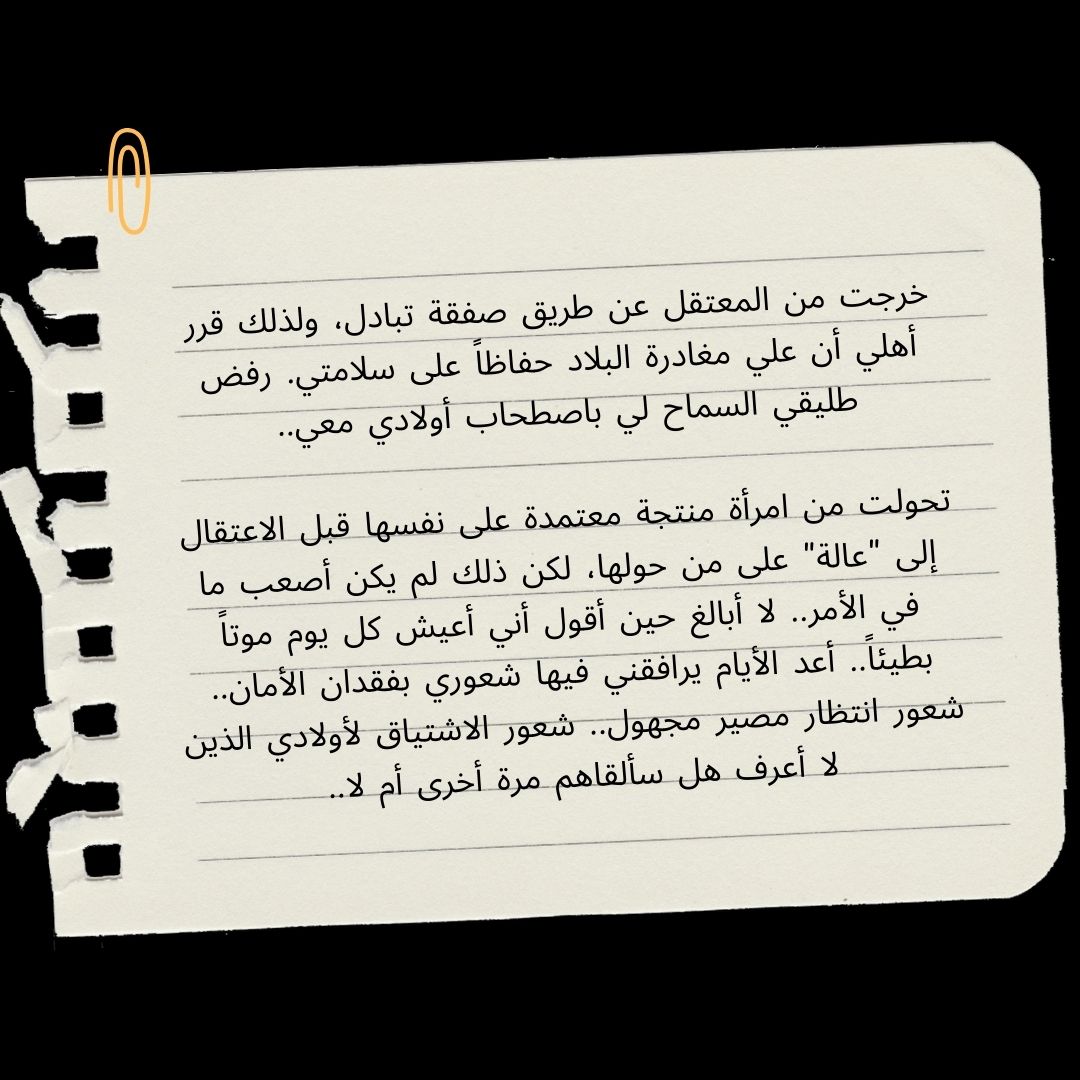
He divorced her, and she barely got to see her two children, whom she had left as children and became now 20 and 22 years old. Her husband refused to let them stay with her.

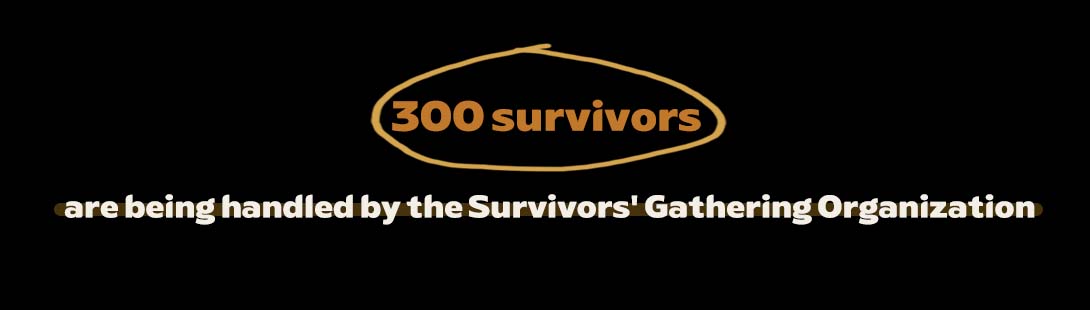
Amira (Head of the Independent Survivors' Gathering organization in Syria) has dealt with dozens of cases like Amal. She says, 'We've seen all forms of tragic stories after release, from disownment by family and friends, separation from spouses, and even threats... and each story has its impact on us.'

“Amira” leans in front of the computer, receiving and responding to messages, trying to help survivors either through volunteer efforts or cooperation with organizations or donations, to provide psychological support, return to education, and establish small projects for them. “Amira” clarifies: 'The pressure has increased after the release of this large number following the liberation of prisons.


"Hanin" isolated herself from everyone's eyes with her children and refused to meet anyone: 'Since I got out, I haven't left the house.

'She doesn't know 'if she's waiting for a miracle to happen or something else to earn money with which she can change her residence and start a new life with her family!'

Every night, she goes to sleep remembering that number she received in prison, which replaced her name, trying to kill her thoughts, until one idea settles in her mind, which is to focus on what she's striving for.

Meanwhile, “Sham” hides her body, a witness to her years in prison, and goes to psychological therapy sessions with Dr. Milana. She is the only one who talks to her after her family took away her phone and all social media.

“Milana” pushes her to move on, but “Sham” interrupts her: 'Will I go back to my studies? Will I make up for the years of my life? And who will marry a raped detainee?

Most of the time, “Milana” is unable to respond, and after “Sham” and all the cases leave, she says: 'At the end of the day, my chest is very heavy. Even today, when some of them speak, they lower their voices, the fear is still inside them despite the regime's departure, as well the threats from some families.'

She continues: 'My tears definitely fall, and I dry them to return to them again, and now I'm coordinating with several parties to support the opening of centers to treat survivors, reintegrate them into society, and document violations to file lawsuits and obtain compensation.'

Driven by much fatigue and despair, “Amal” complied with her family's wish and traveled to Turkey, 'as there's nothing she can stay and endure for,' she says.

She sits in front of the TV, watching the news, then picks up her phone, trying to communicate with her children remotely, hoping they'll come to her one day.

She rests her head on the pillow, with the mark of an electric shock still visible on her forehead, and says: 'Will I remain alone for the rest of my life? Will I never see my children again?' She doesn't hide in the rest of her speech: 'I think about suicide every day and then back down.'

On the TV screen, there's a debate about women's rights—who make up about 50% of Syria's population—in the new version of the country after Ahmed al-Shara refused to shake hands with the German Foreign Minister and appointed Shadi al-Waisi as Minister of Justice, who oversaw the execution of two women in 2015.

This discussion is repeated on the channel inside Dr. Milana's clinic, where her phone rings, bringing her news of the suicide of one of the released women who came out of prison last month. She hangs up the phone, her face frozen, and says with sorrow: 'All medical evidence indicates it's a case of murder, but it's impossible to prove it, amidst the family and society's cover-up, and in such a period.' Nearby, at the Survivors' gathering organization office, “Amira” also receives a call: 'There's a case from Saydnaya Prison with two children resulting from rape, and she needs help.'

When she moved with a team, the woman disappeared and refused to meet them. What Amira knew was that 'she was afraid to meet anyone so that information wouldn't reach her family and they would kill her!'
Sources:

- Interviews with women released from prisons

- Syrian Women Survivors Organization (Testimonies)

- "Survivors" book - Jusoor Publishing

- We hide the identities of the characters and some locations in the story to protect their privacy and safety.


Story: Marina Milad

Podcast: Marina Milad – Ahmed El-Shiekh

Graphics: Michel Adel

Design: Mohamed Ezzat

- This story was produced with the support of the European Union under a fellowship on the impact of conflict and war on media coverage.

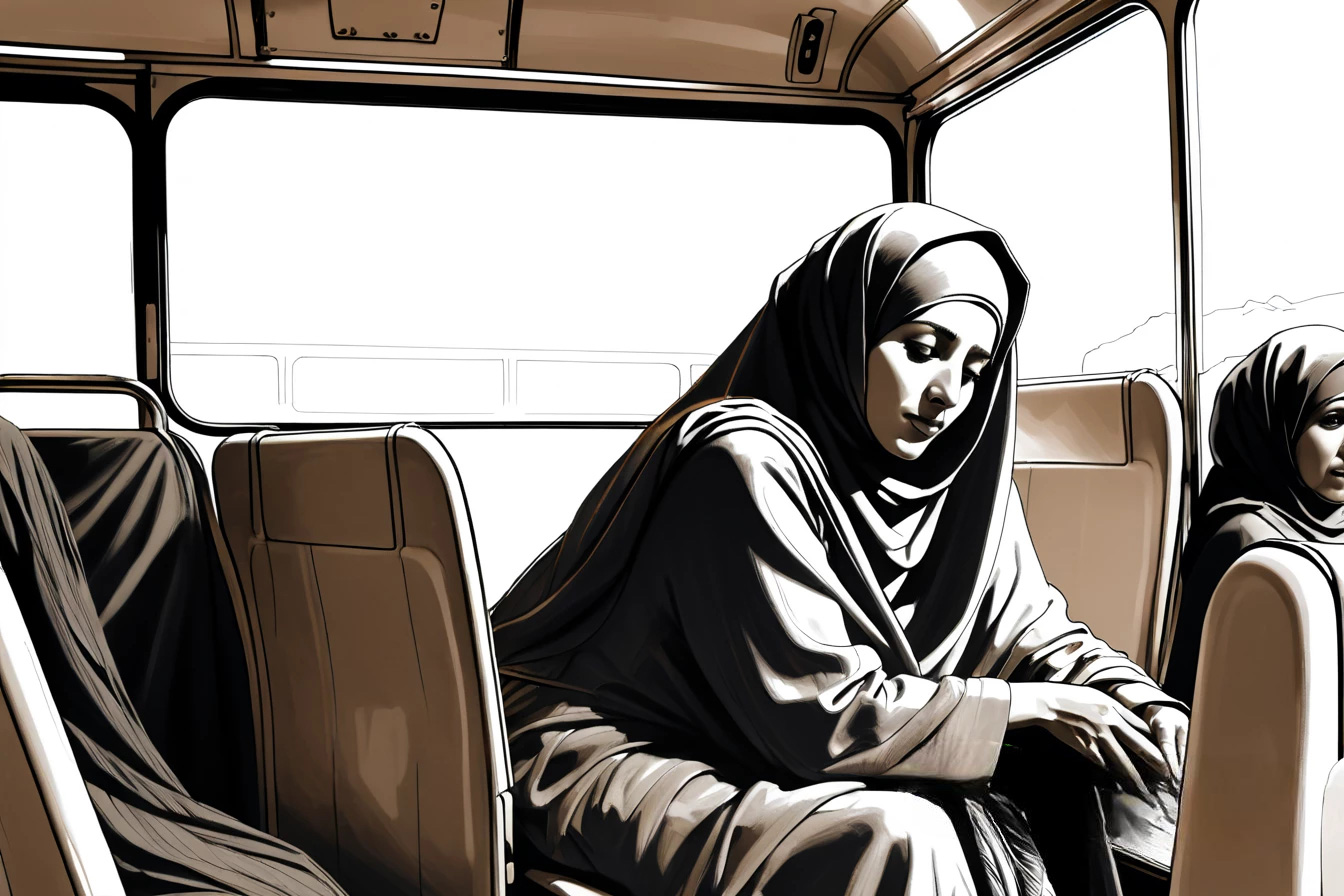
- The drawn images are made with artificial intelligence tools.