
 Nazlet El-Samman, Giza
 October 2024
Up on the rooftop of a plain building, set apart from the Giza pyramids by a jumble of low, uneven, informal houses, Polina Alexandrovna, a Russian national in her forties, met with two men, also in their forties, dressed in traditional Upper Egyptian garments. At a table, another man sat quietly, while the rest of the tables stayed empty in the establishment, a rooftop space converted into a restaurant and café to cater to guests of the hotel, a budget accommodation occupying the building's top three floors, which were once regular apartments.
The Russian woman set her mobile phone down in the middle of the table, utilizing a Russian-Arabic and Arabic-Russian translation application to facilitate communication with the two men. The men did their best to moderate their Upper Egyptian dialect in favor of a more standard colloquial Egyptian Arabic to improve the application's translation accuracy.
You could feel the tension right away — everyone on edge, nobody quite sure what would happen next. It didn’t take long for things to go south. Anticipation gave way to real tension, then the careful calm snapped. Suddenly, the two sides were arguing, throwing accusations back and forth.
They started muttering under their breath, saying things the app couldn’t catch or translate. The whole thing came to a sudden halt when security forces burst in. They grabbed the Russian woman, Polina, and arrested her without regard for the involvement of the other two men.
Right before her trip to Egypt in October 2024, Polina Alexandrovna reached out to her followers on her Telegram channel, which she runs on the Russian app. She aimed her messages at Egyptians, Yemenis, and Syrians interested in enlisting in the Russian military. For Egyptians, she sent two messages: one called out seven people by name, telling them to get in touch so she could arrange their travel to Russia. The other message addressed both Egyptians and Yemenis, stressing that they needed to complete certain medical evaluations as a prerequisite before signing up for military service.
Then she did something odd. She posted photos of 32 Yemeni passports without saying why. Not long after, she shared a list with 202 Yemeni names, urging them all to contact her right away. At the same time, she warned Syrians not to trust anyone who said they spoke for her, whether inside Syria or anywhere else.
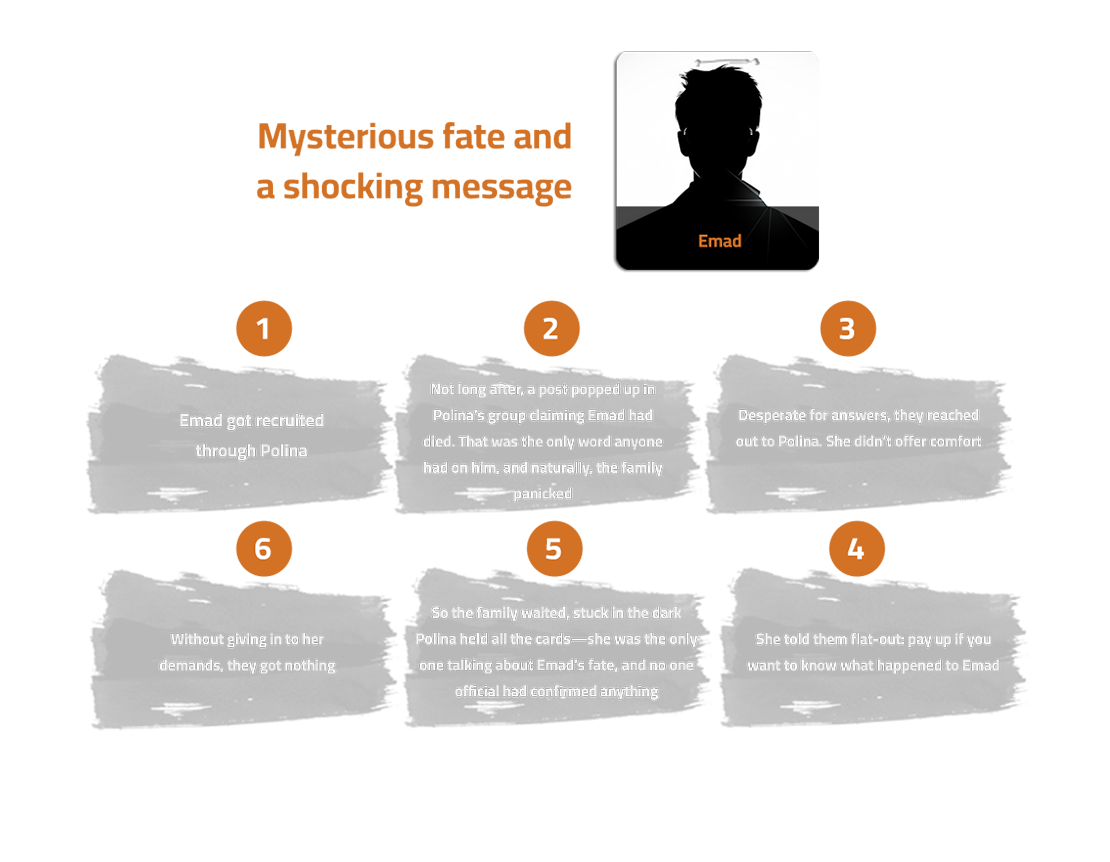
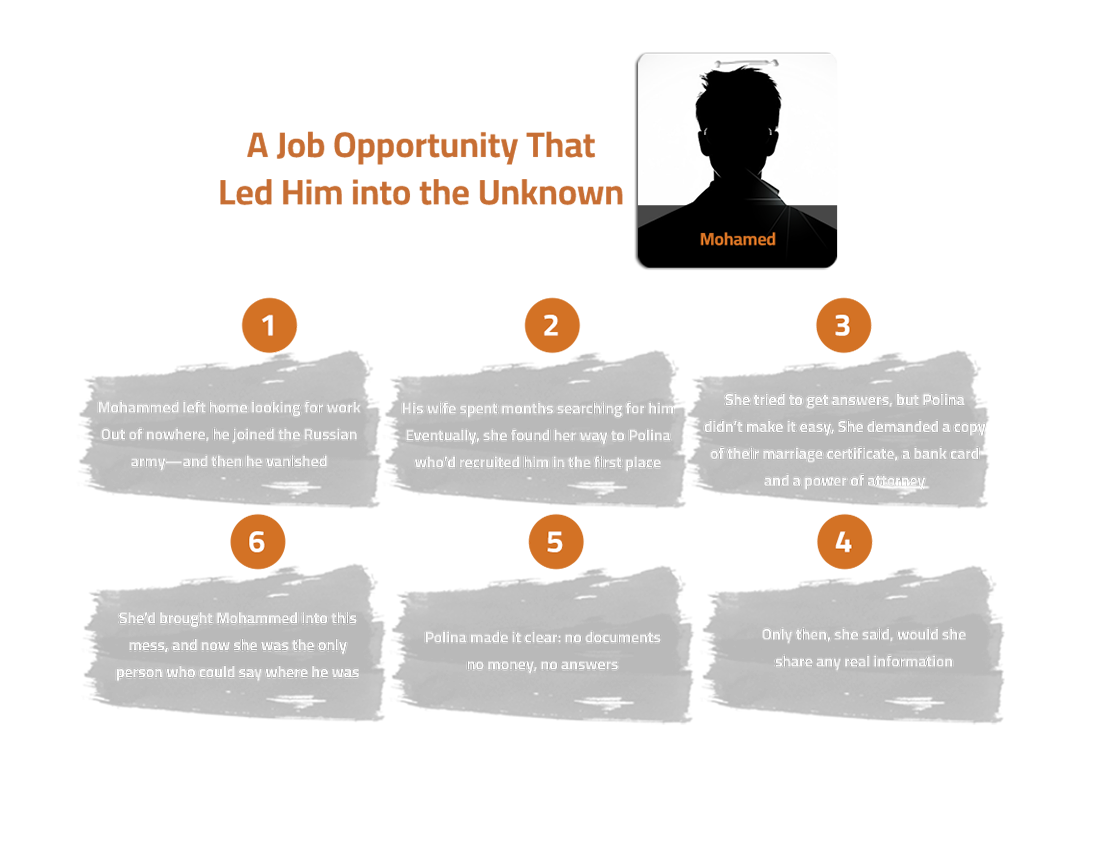
Besides all these public messages in closed online circles, Polina also dealt directly with Yemenis and Egyptians who reached out to her, and she responded to private messages as well. Some of those messages came from people desperate for news: Saeed’s mother and sister, who hadn’t heard from him since July 2024, and the father and uncle of Salem, who was reportedly killed in action on Ukrainian front lines that same summer. There were other families, too — parents of missing or dead Egyptian youths — all looking for answers. Polina was the link; she was the one who had helped their sons join the Russian army, and now she was the only person they could turn to for information.
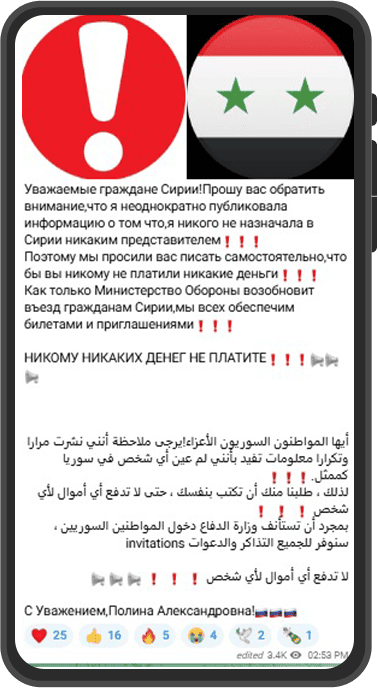
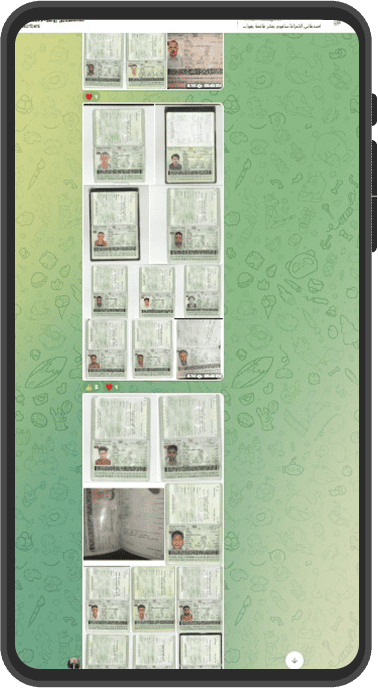
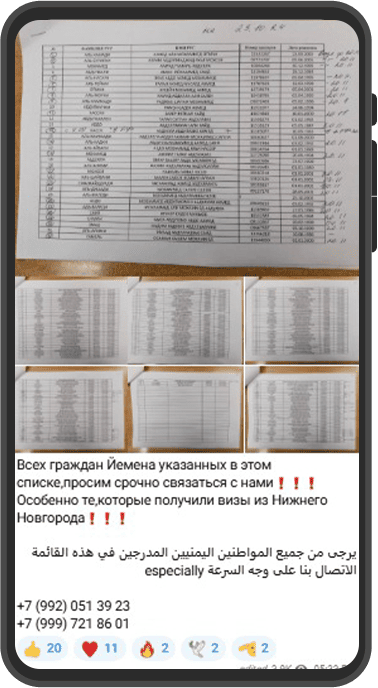
Paulina’s Messages to Young People via Her Telegram Group “Friend of Russia”
On the Ukrainian front, Russian President Vladimir Putin claimed in mid-September 2025 that over 700,000 Russian soldiers are fighting there. That number isn’t far off from what the Ukrainians estimated themselves—623,000 back in April, according to Oleksandr Sersky, the Commander-in-Chief of the Ukrainian Armed Forces. Sersky pointed out that Russian troop numbers are witnessing a continuous increase. Since the war started, the Russian force has grown five times over, with 8,000 to 9,000 new soldiers joining each month.
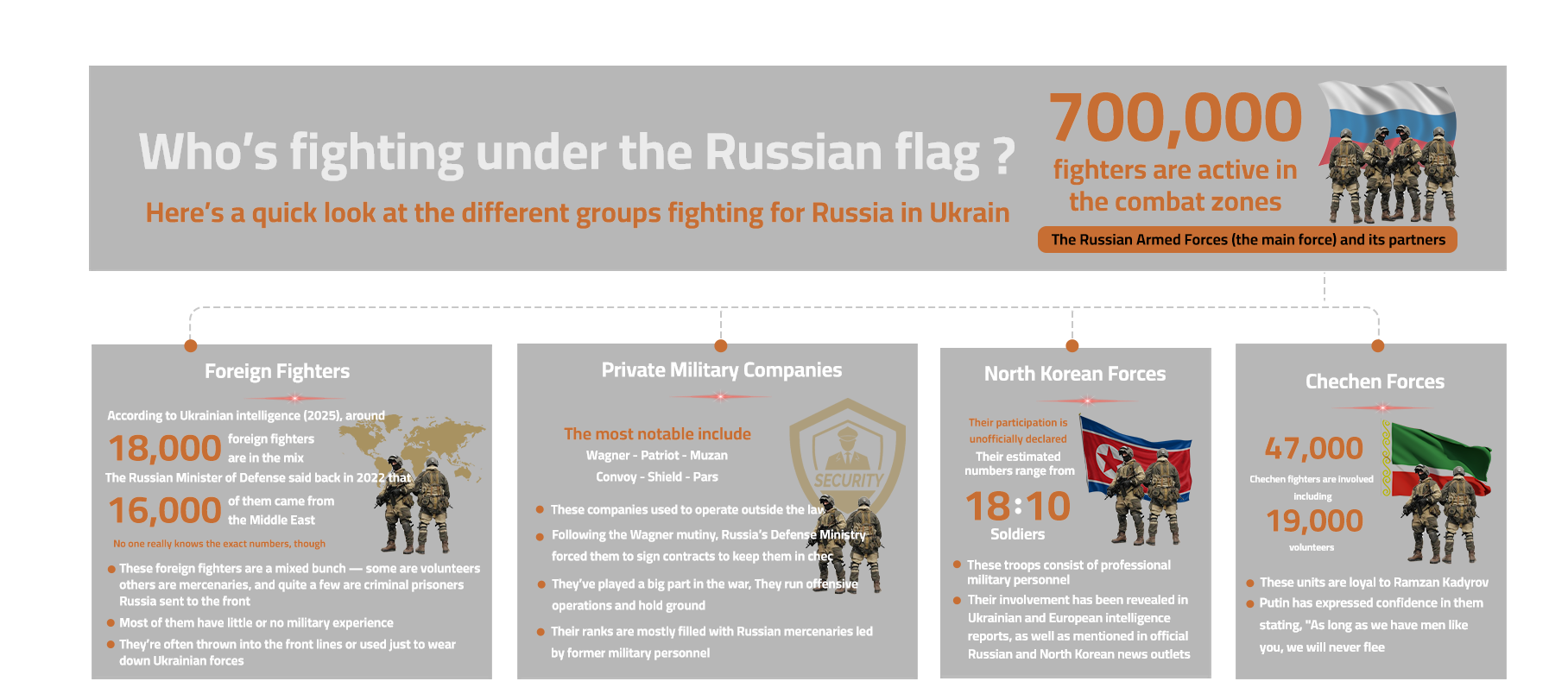
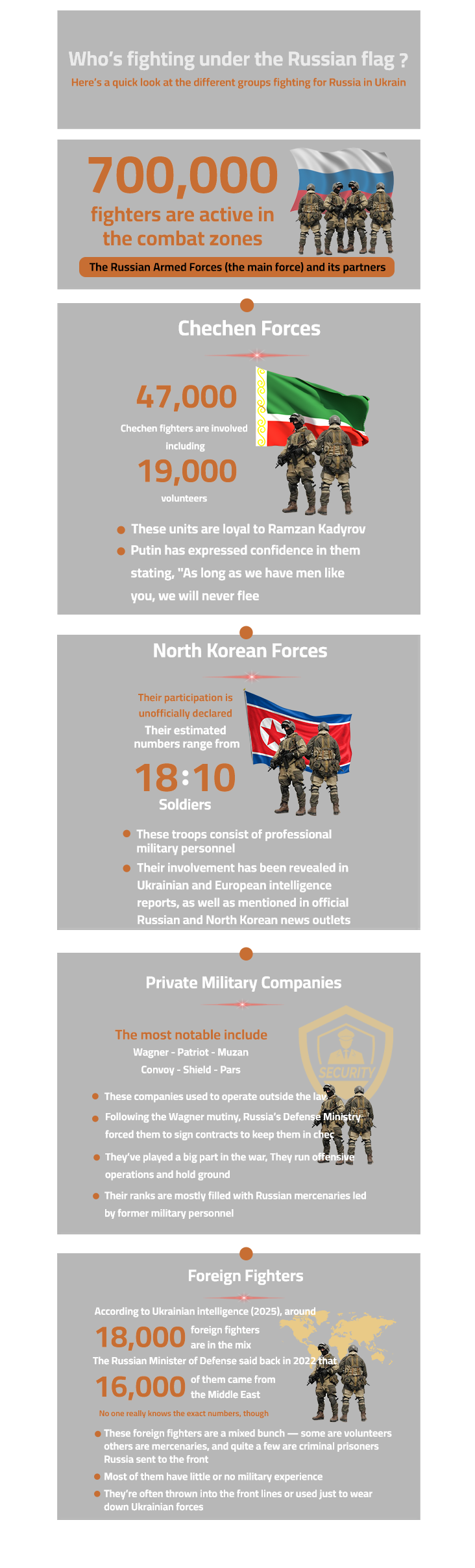
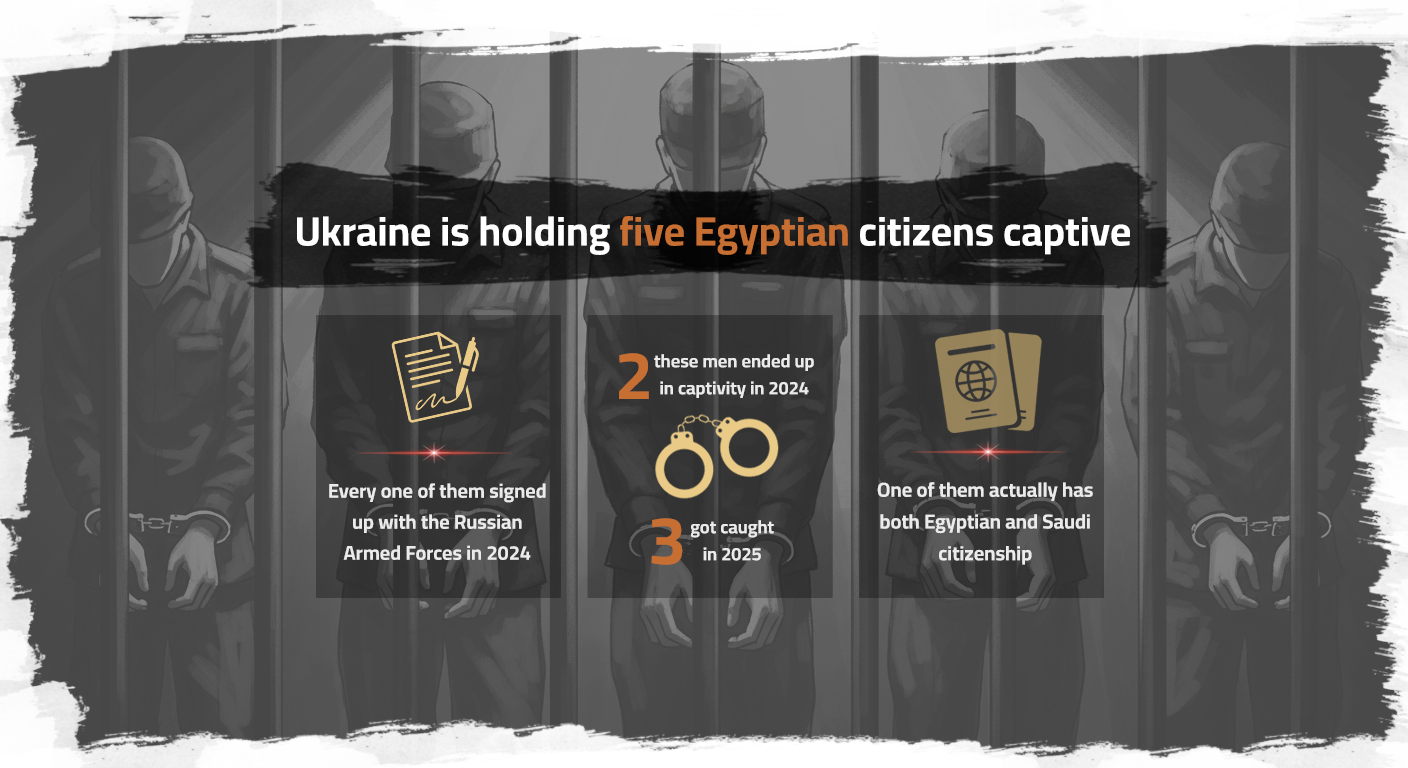
While new legislation and amendments to military service laws aim to facilitate foreign recruitment into the Russian army, official statistics regarding the number or proportion of foreign contractors and volunteers remain unavailable. However, the Ukrainian Coordination Committee for Prisoners of War Affairs has compiled data offering insights into the composition of foreign fighters within the Russian forces. The Committee has identified over 18,000 foreign nationals without prior military experience from 128 countries and unrecognized territories fighting alongside Russian troops. Ukrainian military affairs specialist Yenis Popovich clarifies that this figure represents only identified individuals, asserting their limited impact on overall combat operations. Popovich characterizes these fighters as expendable resources deployed to the front lines, particularly within assault infantry units, and subject to apparent disregard by Russian commanders.
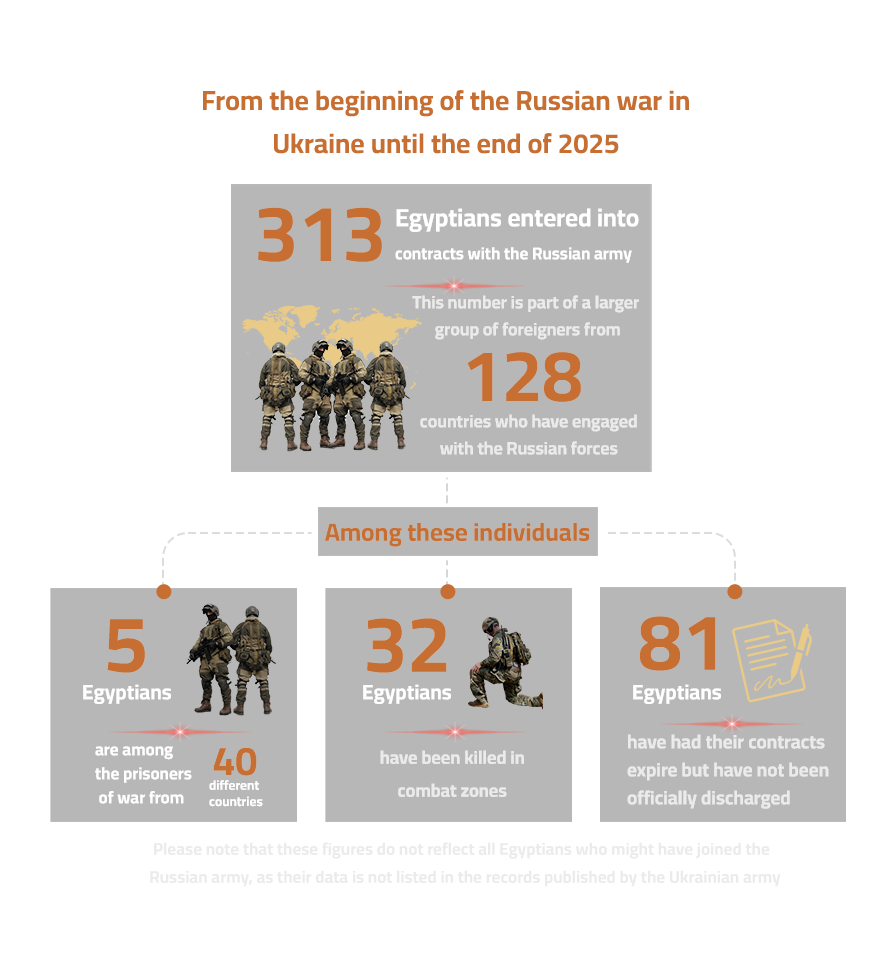
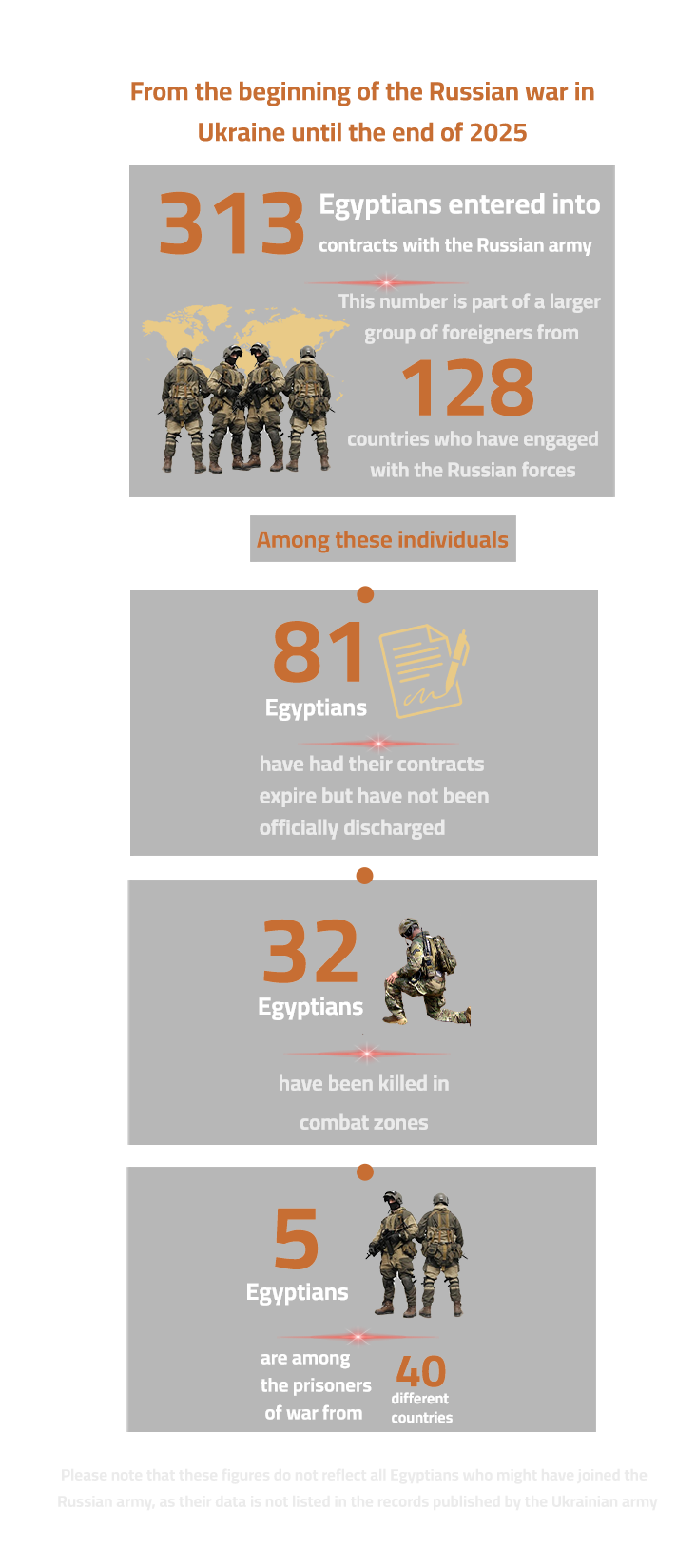
The Ukrainian Prisoners' Affairs Commission reports that prisoner-of-war camps in Ukraine house foreign detainees from 40 nations, recruited by Moscow. These individuals originate from diverse geographical regions, primarily within Asia, South America, and Africa. Military analyst Denis Popovich asserts that Russia actively recruits foreign nationals to offset personnel losses in Ukraine. This assertion is substantiated by the increased prevalence of Russian communication platforms and Telegram channels that specifically target and enlist foreign individuals of various nationalities and ethnicities. Recruitment efforts are focused on Arab, Asian, and African nations, as well as the republics of the Caucasus and North Caucasus regions.
Reports suggest that the survival rate among these foreign combatants is low. Popovich attributes this to inadequate combat experience and deployment to high-risk front-line positions or missions with a high probability of fatality. This is further supported by accounts from five Egyptian recruits in the Russian military.
Among those were two Egyptians, Saeed and Salem. Saeed's status on the Ukrainian battlefront remains unknown, while Salem's death has been verified. Their families are now searching for answers—hoping to find Saeed and bring Salem’s body home to Egypt.
At first, Polina promised to help Saeed’s mother and sister, saying she’d try to find out what happened. But as they kept asking for news, she started dodging them, then stopped answering completely. The family reached out to Russian organizations for help, and Saeed’s mother accused Polina of taking advantage of her son. Since the mother and daughter were in Moscow, they were able to put some pressure on Polina. That’s when Polina started threatening them. The family didn’t back down, so her threats got nastier—she even warned she’d “destroy” Saeed if his mother didn’t stop accusing her of stealing his pay. She demanded that they quit asking for help on social media, asserting that such posts were detrimental to the Russian army. “This defamation will destroy your lives, and you will be responsible for everything,” she told them. Polina asserted to Saeed's mother that her son was not entitled to any financial compensation, stating: “Your son owes me money. Your son deceived me, and I forgave him. Don’t you dare speak up, or I’ll find your son, you, and your whole family—remember that.”

"Audio Recording"… Paulina Threatens the Young Man’s Mother, Saeed
Saeed’s mother and sister being in Russia put a lot of pressure on Polina, even with all the threats the family faced. That’s a whole different story compared to Salem’s family. When Salem’s father found out his son had died, he reached out to the broker. He wanted help bringing his son’s body back home and making sure his wife and two kids got what they were owed. Polina was fine with helping out, but she told him he needed to get a notarized power of attorney authenticated by both the Egyptian Ministry of Foreign Affairs and the Russian Embassy in Cairo to finalize the necessary official procedures.
Once Salem’s father started working on that paperwork—mostly because the Russian woman kept pushing to get it done quickly so his son would not end up buried in a foreign cemetery within the Russian capital—he received a cautionary warning from Salem's friend, a Moscow resident, regarding the risks associated with engaging with this woman. The father recounted the details of the phone call: “Mohamed called me and said, ‘What you’re going to do is wrong. She won’t bury him, she won’t do anything. She’ll take the money and do nothing.’”
This warning made Salem’s father stop and rethink the whole thing. He realized he needed some real guarantees from the broker before issuing the power of attorney. So he asked her for those guarantees. Her answer caught him off guard: “I’m coming to Egypt, and I’ll meet you in person to prove I’ll do everything I promised.”

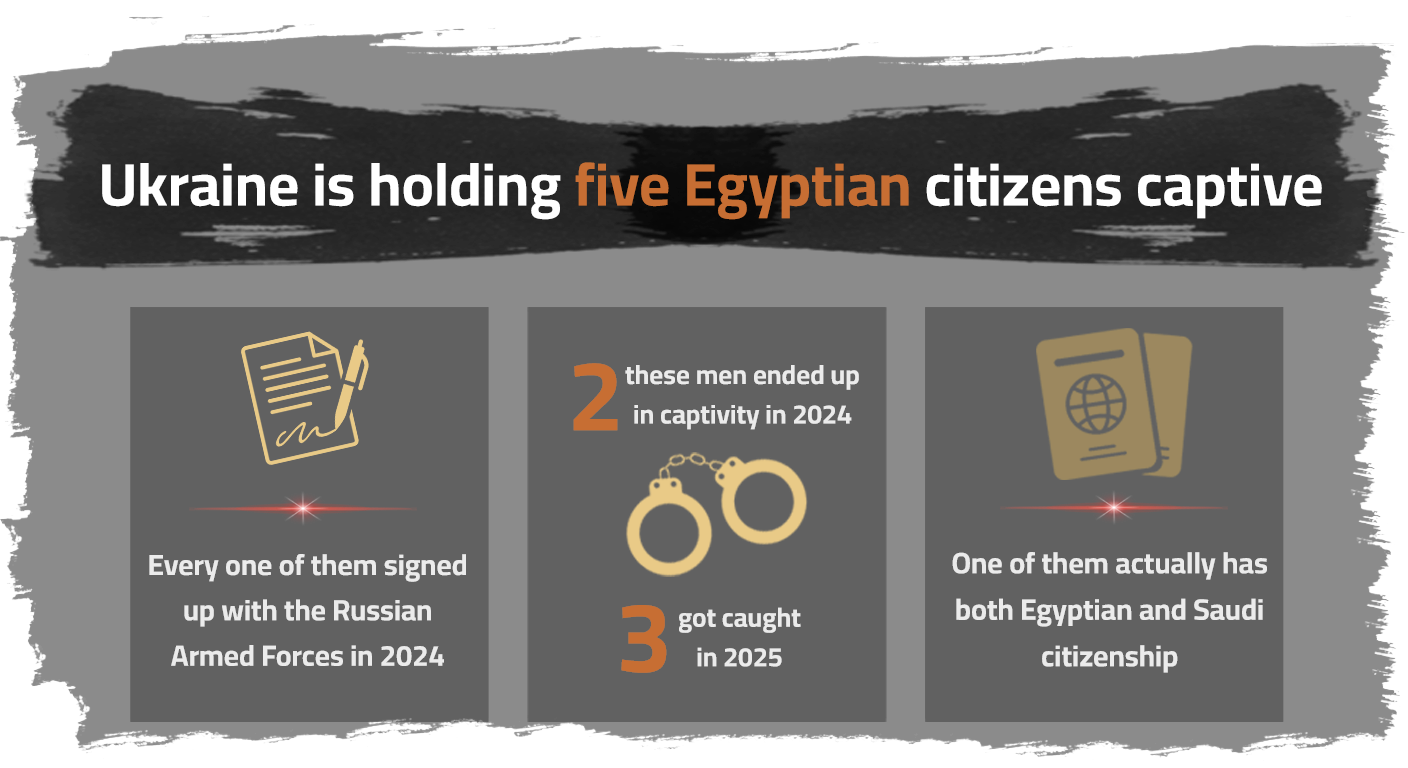
Salem, whose death left behind a widow and two orphaned children, and Saeed, whose fate remains unknown to his mother and sister, are among 313 Egyptians documented to have contracted with the Russian army. Their names appear on a list of foreign combatants compiled by the "I Want to Live" Foundation, an entity affiliated with the Ukrainian Ministry of Defense. This list identifies five Egyptians among foreign prisoners of war who fought alongside Russian forces, two of whom agreed to speak with us.
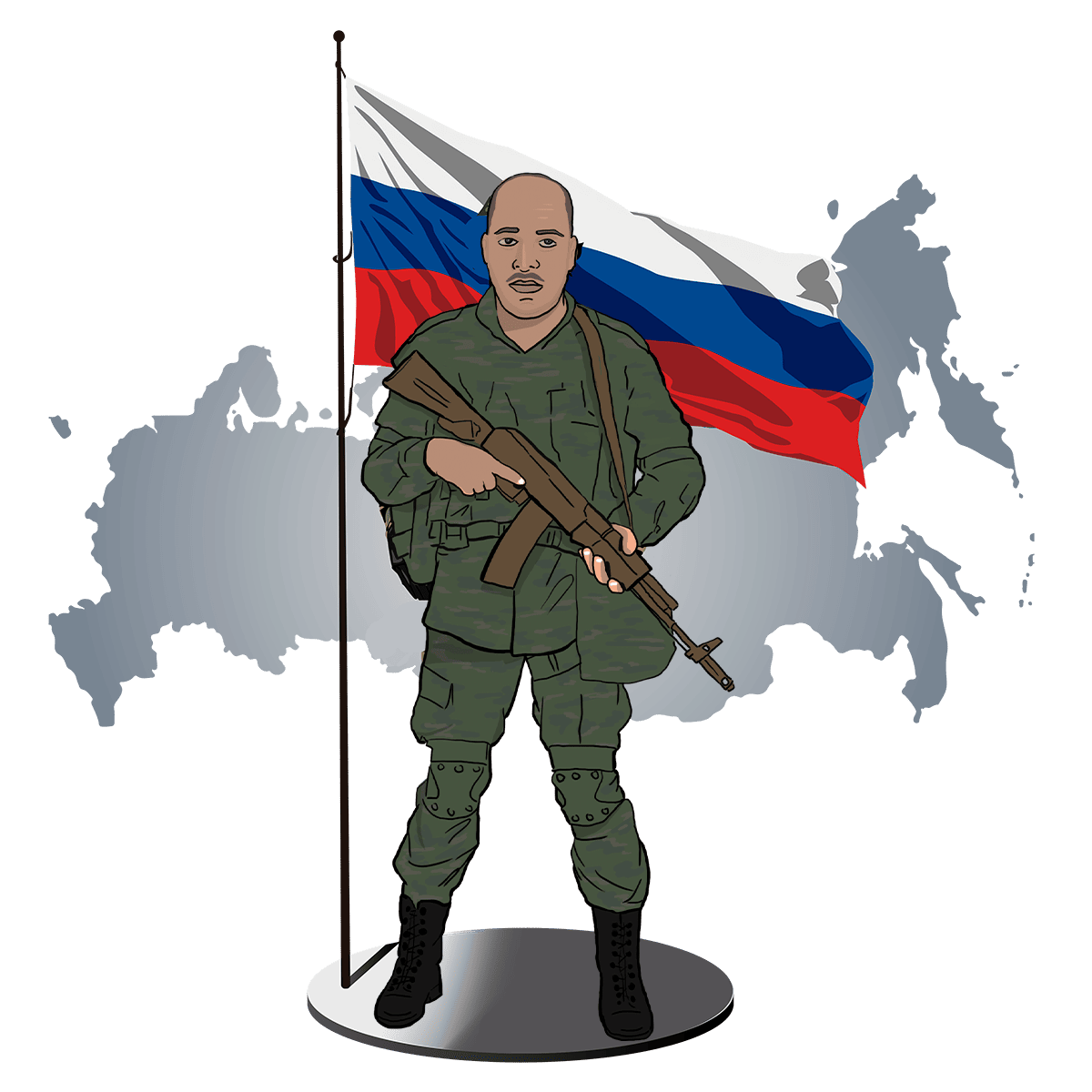
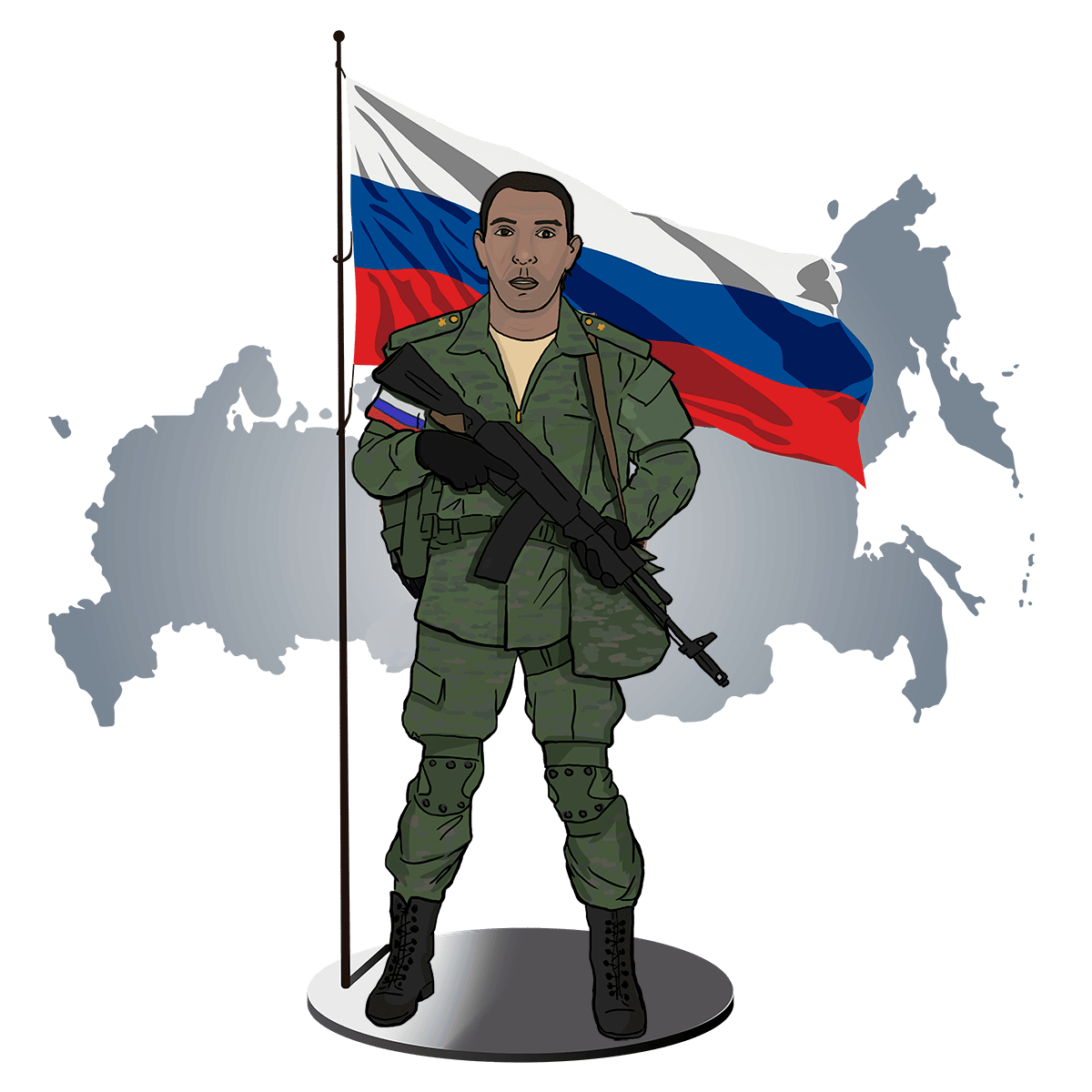
They are subject to prosecution as "mercenaries." According to Denis Popovich, a specialist in military affairs, international law does not afford them prisoner-of-war status, justifying their trial based on their engagement in combat for financial compensation and the prospect of citizenship. This precarious situation is further compounded by the Russian government's apparent indifference to their plight. Until November 2025, Moscow has not, according to Popovich, included any foreign nationals, regardless of Russian citizenship status, in prisoner exchange agreements, with the exception of North Korean military personnel.
This reality is a source of bewilderment for Mohamed Radwan El-Senousi, one of the five Egyptian nationals currently held captive in Ukraine, who expresses a fervent desire to return to Russia. “There’s nothing—no signs, no news—that says I can go back to Russia,” he says. "Guys like me are not part of any exchange programs. I’m here with Yemenis, Egyptians, Nepalese, and others from various African nations, but we’re not included in any swaps or deals.”
El-Senousi stops for a second and laments, "I have a Russian passport. When there’s a prisoner exchange, it’s always Russians for Ukrainians." The young man, whose Egyptian citizenship was revoked, questions: "I don’t get it. I’ve asked so many times, talked to the media and everything. But they still won’t add me to any exchange.
Mohammed al-Sanousi’s mother is still holding out hope. She wants the Egyptian government to step in and help her son, even though the Egyptian Ministry of Interior already revoked his citizenship after he joined the fighting in Russia. She earnestly appeals for his case to be considered a "humanitarian matter for the sake of his family," stating, “We had no idea what he was doing over there. If I’d known what was coming, I never would’ve let him go to Russia to study.”
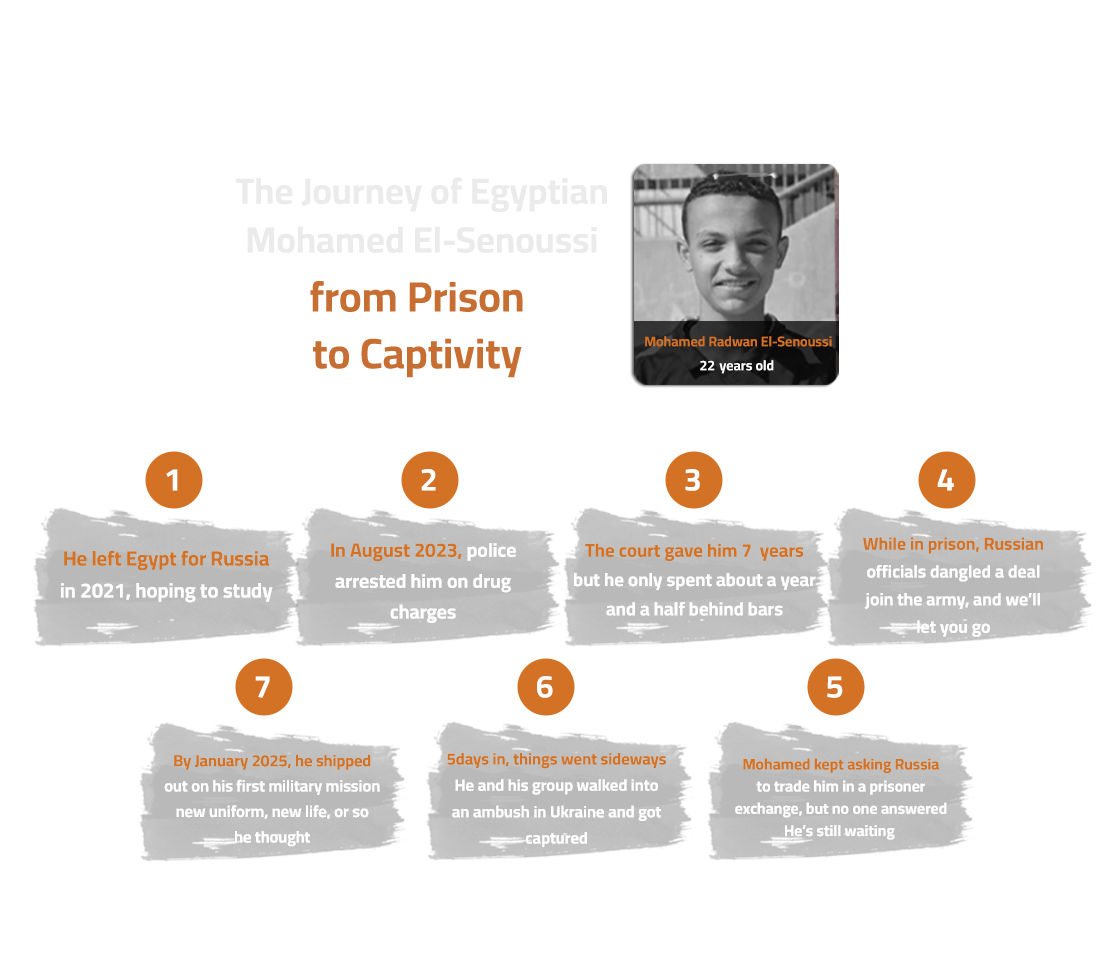
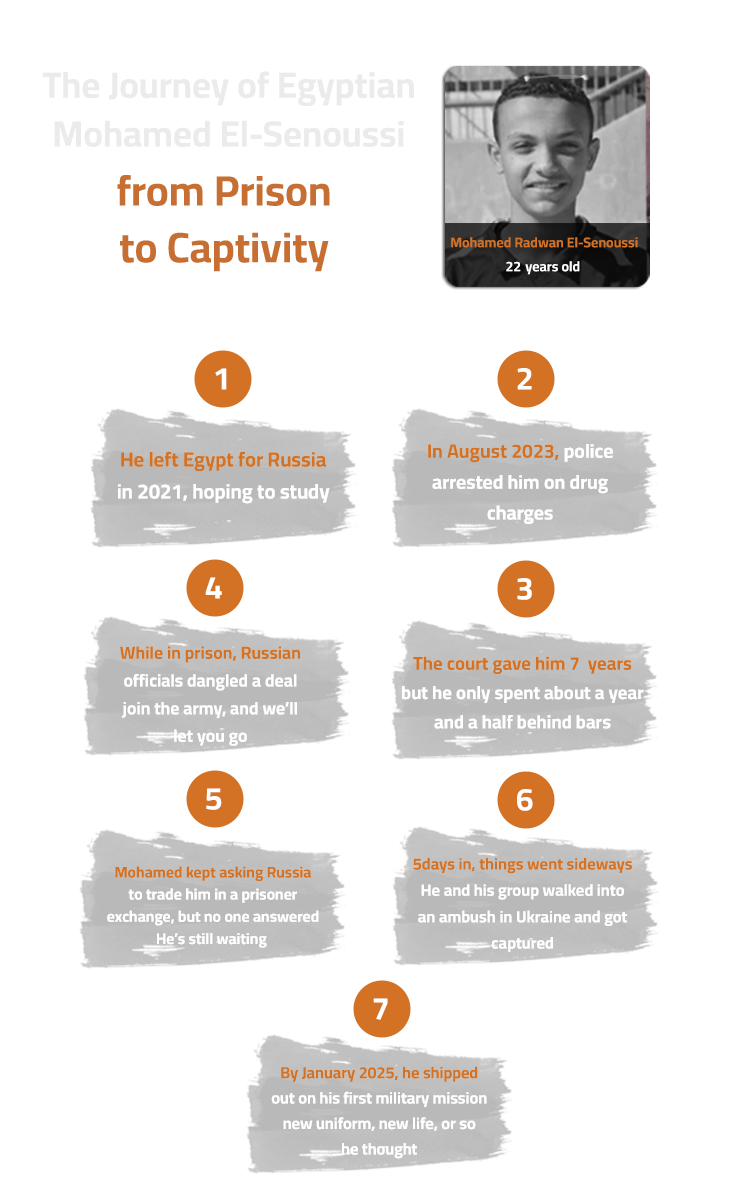
Mohammed, a 22-year-old who journeyed to Russia for academic pursuits, endured a year in Ukrainian captivity following a brief one-month deployment on the front lines with the Russian army. Before all that, he served one and a half years in a Russian prison after receiving a seven-year sentence for drug trafficking. He is reportedly one of 50,000 prisoners recruited into the Russian military. According to Wagner Group documents cited by Yevgeny Prigozhin, the company's former head, in an interview with Konstantin Dolgov, a pro-Kremlin Russian journalist, 35% of these prisoners were killed in action.
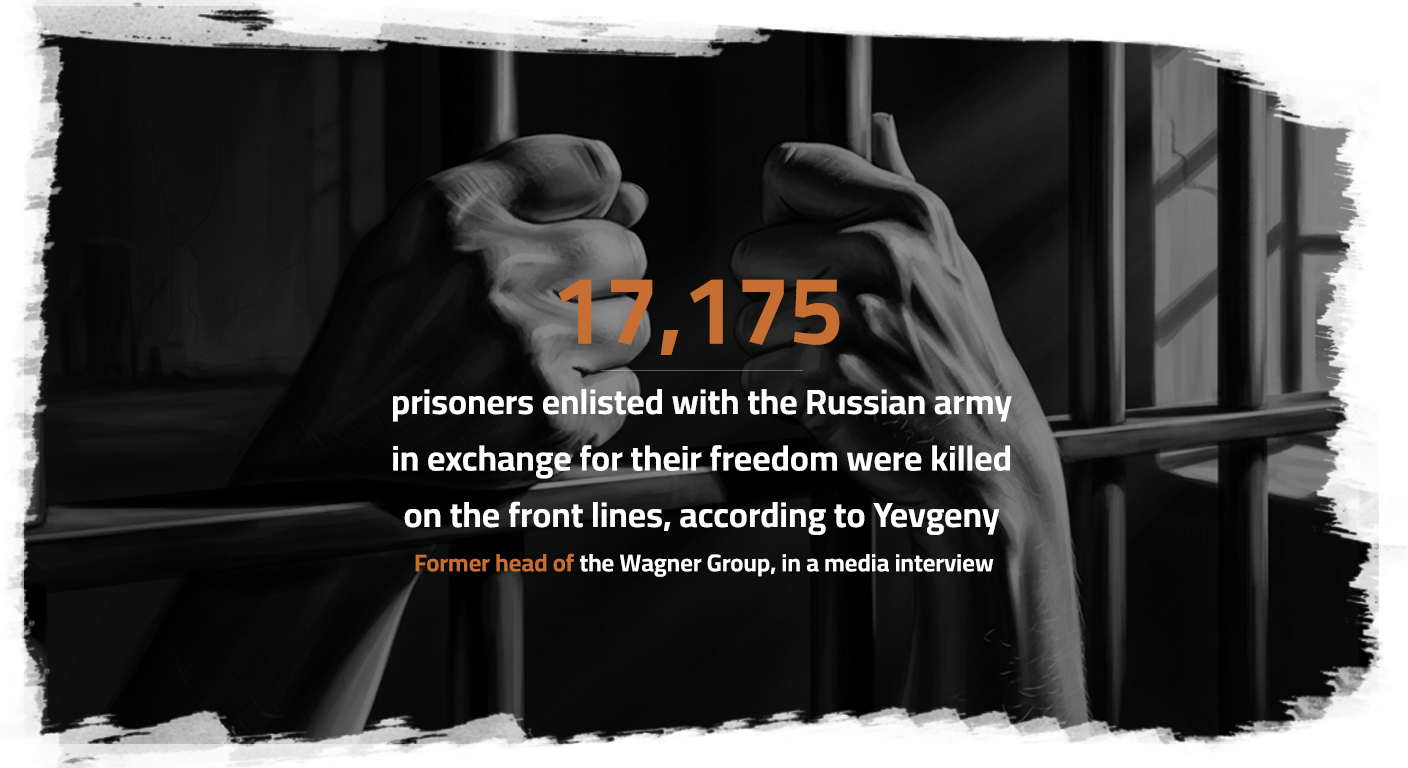
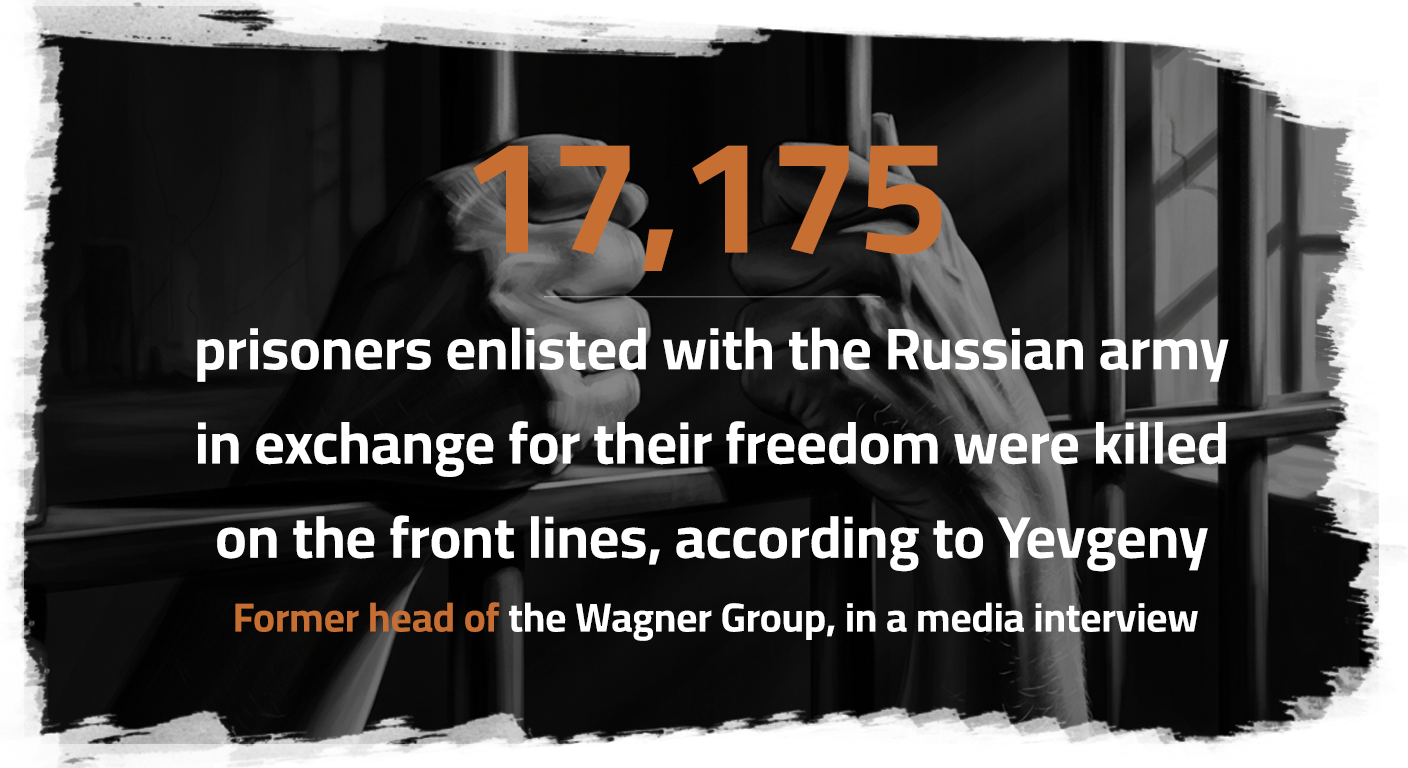
Mohammed Senoussi joined the army just to get out of prison. Life behind bars was getting tighter every day, and he wasn’t the only one thinking about it—other inmates started looking at military service as their way out too. “Officers would show up in the exercise yard and lay out the perks for us,” he says. “The biggest one was freedom. They promised to let us out and wipe our records clean if we agreed to fight with the army.”
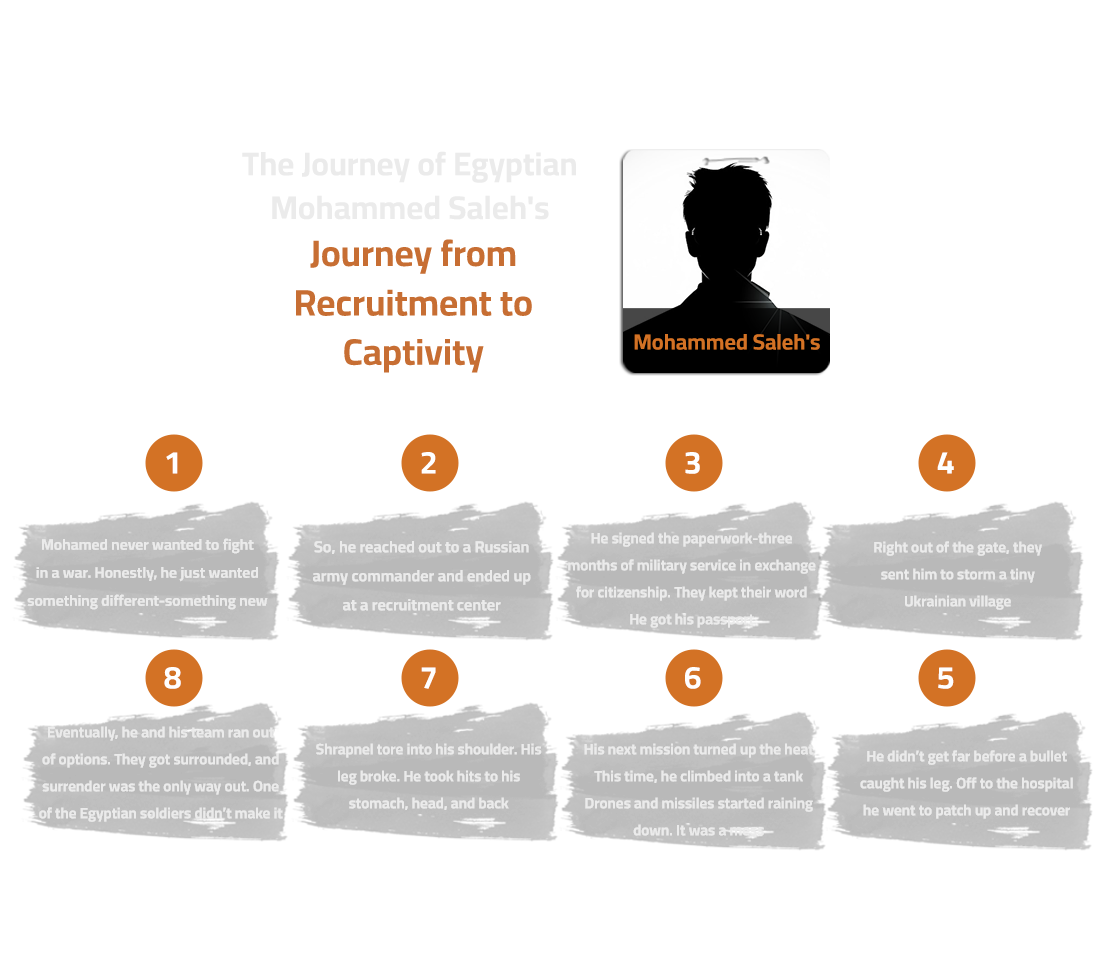
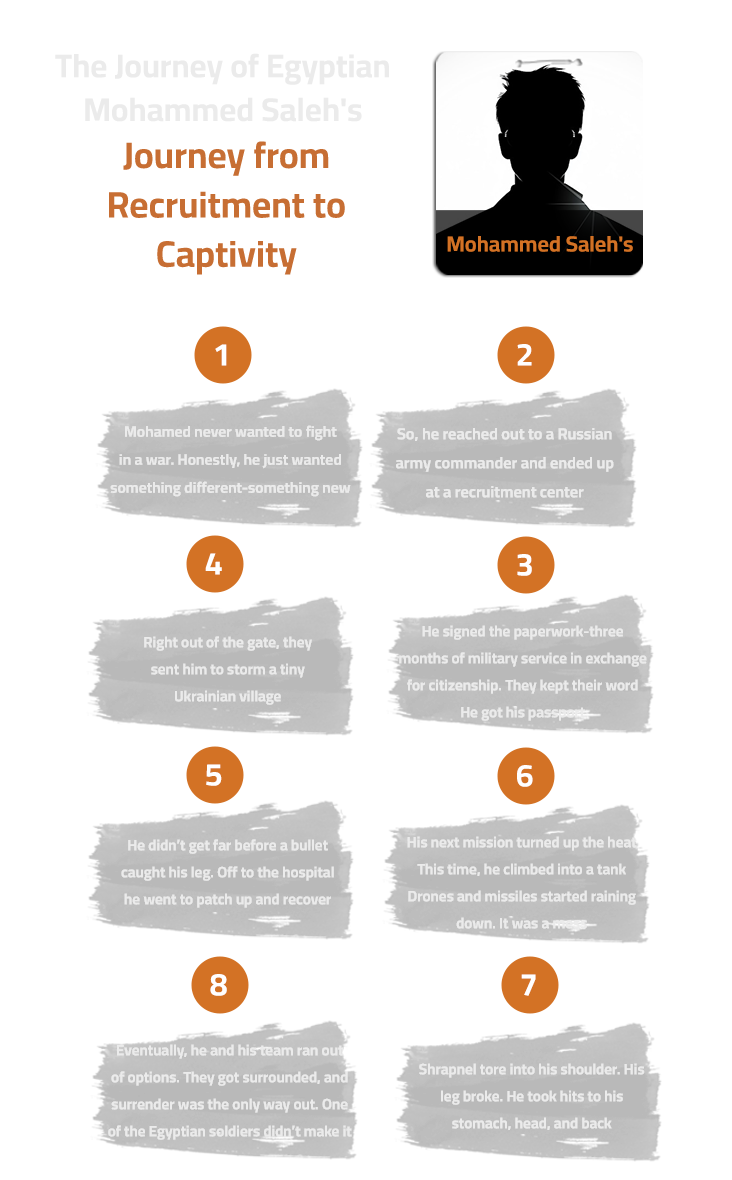
The Russian government’s incentives pulled in thousands of foreign students—not just prisoners. Many of these students were desperate. Some had been kicked out of university or were facing deportation, just like Mohamed Saleh from Egypt. He was only 23 when the university expelled him after seven months. For him, signing a contract with the Russian army felt like his only way out.
The way Mohamed Saleh got pulled into signing that contract with the Russian army wasn’t some random event—it was a calculated move. Russian security wanted more foreign recruits, and they knew exactly how to get them. In one of Russia’s border provinces (I’ll leave out the exact spot to keep our source safe), a security agency targeted Arab students at the local university. They wanted these students to spy on classmates who were struggling—anyone with money problems, issues with the university, or at risk of getting kicked out of their dorms. That’s exactly what happened to Marwan Mohamed, a medical student. Two men barged into his room, said they were with a security agency, and pointed guns at him. They dragged him out of his place and took him to a forest on the edge of town. They grabbed his phone and passport, then started grilling him for information about other foreign students—especially Egyptians and other Arabs. They wanted to know everything: their legal status, their personal situations, and so on. Marwan refused to cooperate. That’s when they threatened to kill him unless he recorded a video making it look like he was helping Russian security of his own free will.
Scared for his life, Marwan gave in. He started feeding them information about certain students. The questioning never really stopped—they kept calling him in, grilling him about this or that student, professors, even supposed corruption. Eventually, he got his chance and ran for it—escaped to Moscow, made it to Sheremetyevo Airport, and got out of Russia. Still, he’s on the run.
Russian security services wanted dirt on foreign students. According to Marwan, a medical student, their plan was to use these students—recruit them, push them into joining the army. Marwan saw it happen to people he knew. For most, it wasn’t some grand idea; they were just desperate, dealing with their own struggles, and that’s what pushed them to enlist.
That’s pretty much what happened to Mohamed Saleh, an Egyptian student. Right now, he’s stuck in a camp in western Ukraine, held with Russian prisoners. He acted on a friend's advice that military service was the only way to avoid being sent back to Egypt.
Saleh says that back then, some friends joined up, too. They bragged about big paychecks and their shiny new citizenship. Saleh did not tell his family or ask anybody for advice. He just grabbed the officer’s phone number from a friend and made the call. That call changed everything—a car showed up at his place, took him straight to the recruitment center, and just like that, two months later, he landed in Ukrainian captivity.
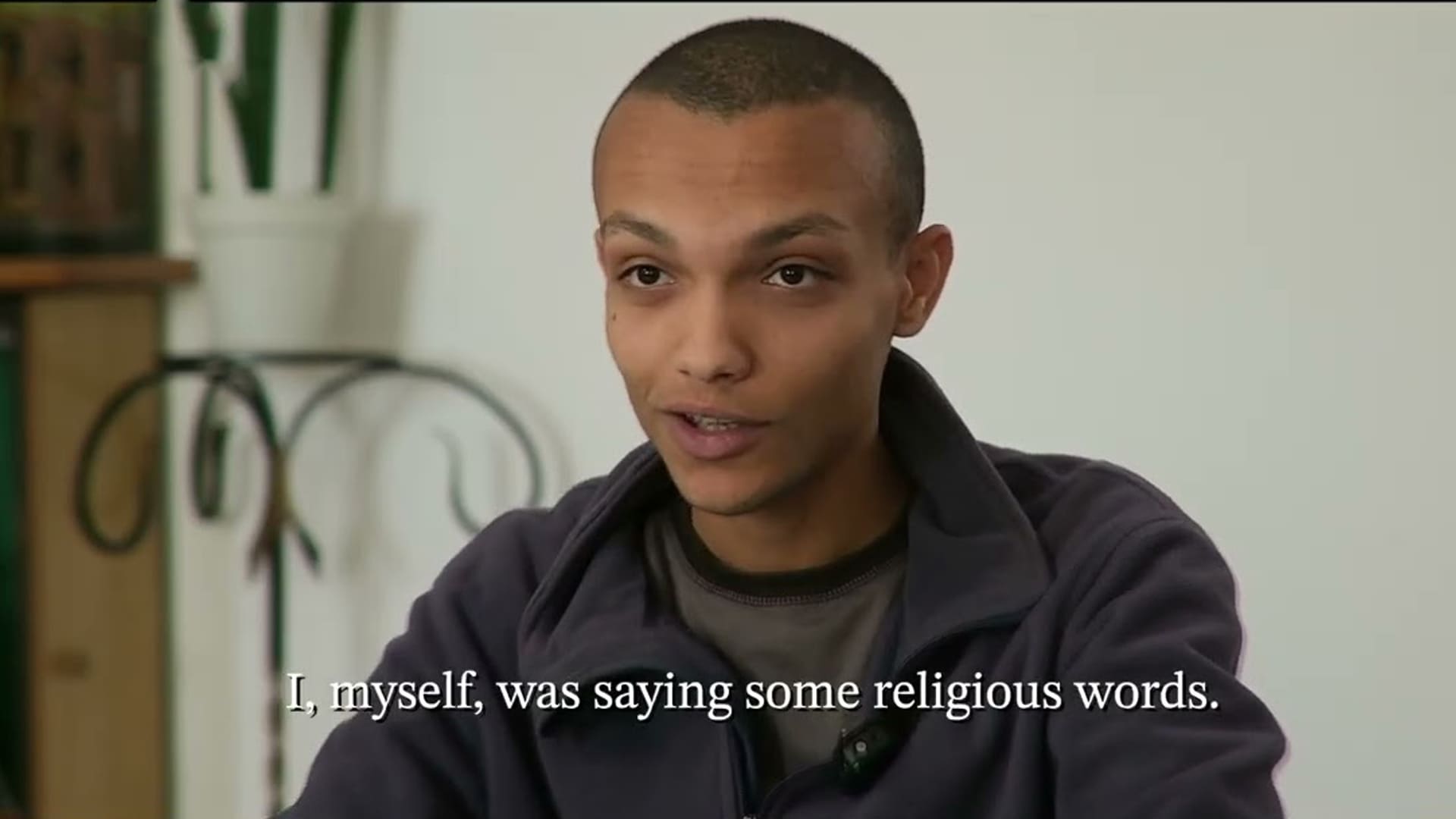
Exclusive Interview with Prisoner Mohamed El-Senousi
Exclusive Interview with Prisoner Mohamed Saleh
Out of every thousand fighters, just one gets captured, according to the Coordination of Prisoner of War Affairs in Ukraine. Petro Yatsenko, a representative from the Prisoner Coordination Headquarters, calls these prisoners lucky—they ultimately made it out alive. Still, they will likely face prosecution for "mercenary activity" due to the unlawful nature of their involvement in the conflict. Until their trial, though, they are afforded the same treatment as prisoners of war, consistent with that of Russian prisoners.

One morning in October 2024, an Aeroflot flight touched down at Cairo International Airport. Among the passengers was Polina Alexandrovna. She grabbed a taxi she’d booked through a ride-hailing application and headed south, aiming for the Pyramisa Hotel near the Giza Pyramids. A few hours later, Salem’s father messaged her on Telegram, asking when they could meet. She shot back a quick reply, just the time and place, nothing extra.
Polina wasn’t just meeting Salem’s family while in Egypt. She also met with several Egyptians and Yemenis. Among these encounters was a meeting with "A.R.," an Egyptian residing in the United States, and a separate meeting at a prominent mall in Nasr City with two young men who were about to head to Russia, intending to enlist in the Russian army.
Whenever Polina set up a meeting or interview—whether with go-betweens, would-be travelers, or families of those who’d signed on with the Russian army—she always made sure to coordinate everything in advance to ensure her security in the event of potential threats or persecution in Egypt.
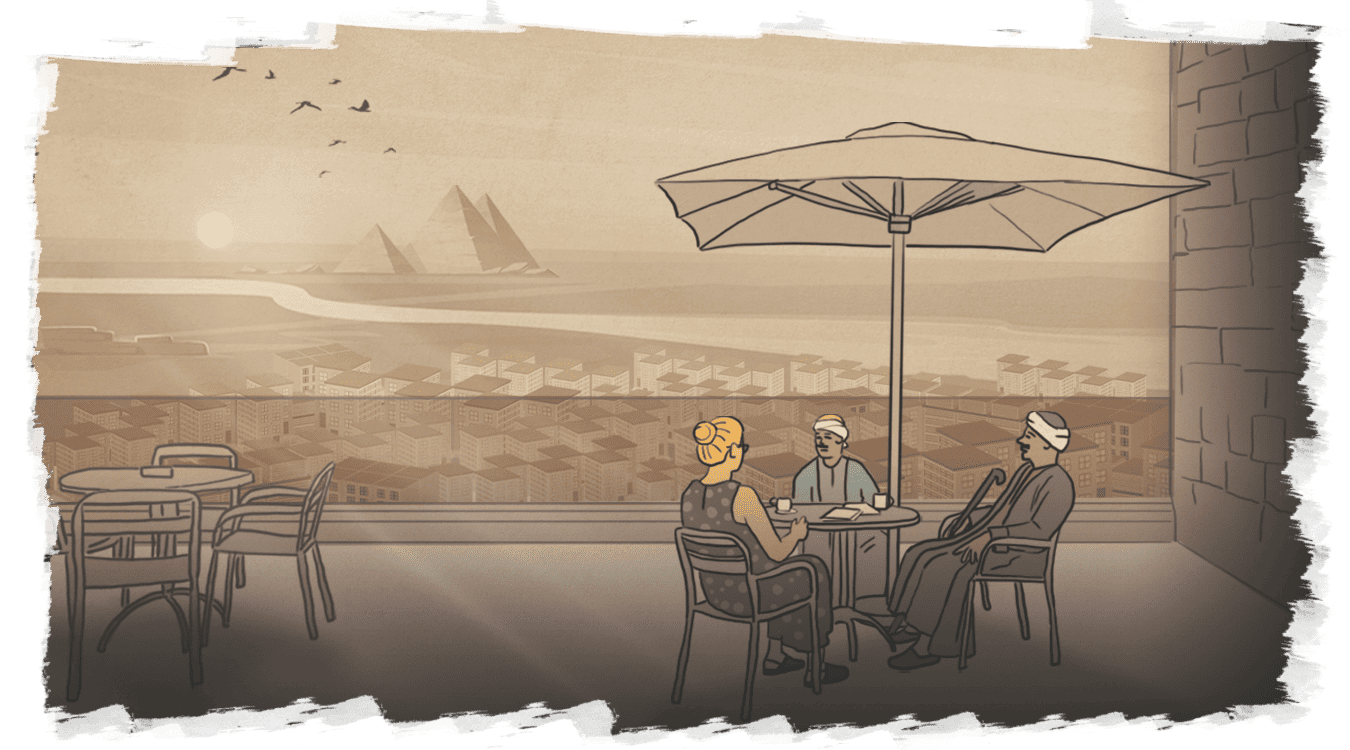
The day after Polina talked with the two young men, she finally met Salem’s father, who brought his brother along. They met on the rooftop restaurant of the Pyramisa Hotel, and communication was facilitated through a translation application. According to Salem's uncle, “She introduced herself as someone powerful in Russia, someone who could arrange to bring Salem’s body back to Cairo.” But she had conditions. Besides needing an official power of attorney, she demanded that they pay her upfront for her efforts. This infuriated both the father and the uncle—they wanted the money Salem was owed for his contract with the Russian army, not extra fees. Polina wouldn’t budge. She insisted on payment in advance for what she called “her service.” Things got tense, fast. The conversation turned into shouting, threats flew, and before long, security forces showed up. They asked Polina for her ID and took her with them, ignoring the two men completely.
On our journey, we ran into three families. Each had their own story, their own names, but the same heartbreak—someone they loved vanished after joining the Russian army. The families searched everywhere, clinging to any scrap of hope. That’s when they met Polina, who promised answers. Instead, she tried to squeeze them for money, dangling the tiniest bit of information about their missing relatives in front of them.

Polina and her associates in Egypt operate a recruitment network that extends from Cairo all the way to the far corners of Upper Egypt and the Delta. You keep hearing the same stories from victims and their families. Local brokers — they’re the first step for Egyptians who end up fighting in Ukraine — always seem to find new ways to dodge the rules the Egyptian government put in place to stop people from joining the Russian army. And all this came to light right after we published the first part of this investigation. Take Mustafa Nassar, for example. What happened to him in mid-December 2025 says a lot.
Mr. Nassar inadvertently uncovered the fraudulent scheme he had encountered while in transit at Queen Alia International Airport in Amman, Jordan, en route to Moscow. By the way, direct travel from Egypt to Moscow necessitates security authorization.
The broker managing Mustafa's travel chose Jordan as the layover country to get around Egypt’s travel restrictions to Russia. Brokers and travel agents don’t just use Jordan — Oman and the Emirates are also common stops. Some people even fly out of secondary Egyptian airports such as Borg El Arab, Sphinx, or Hurghada, thinking they’ll face less strict security. Travelers who made it out through these airports share their tips in closed social media groups for Egyptians in Russia, where people are always swapping stories and advice about making the trip. These groups are also where travel agents are active, seeking to attract individuals interested in traveling or contracting with the Russian army. We have documented some of these recruitment offers from such agents.
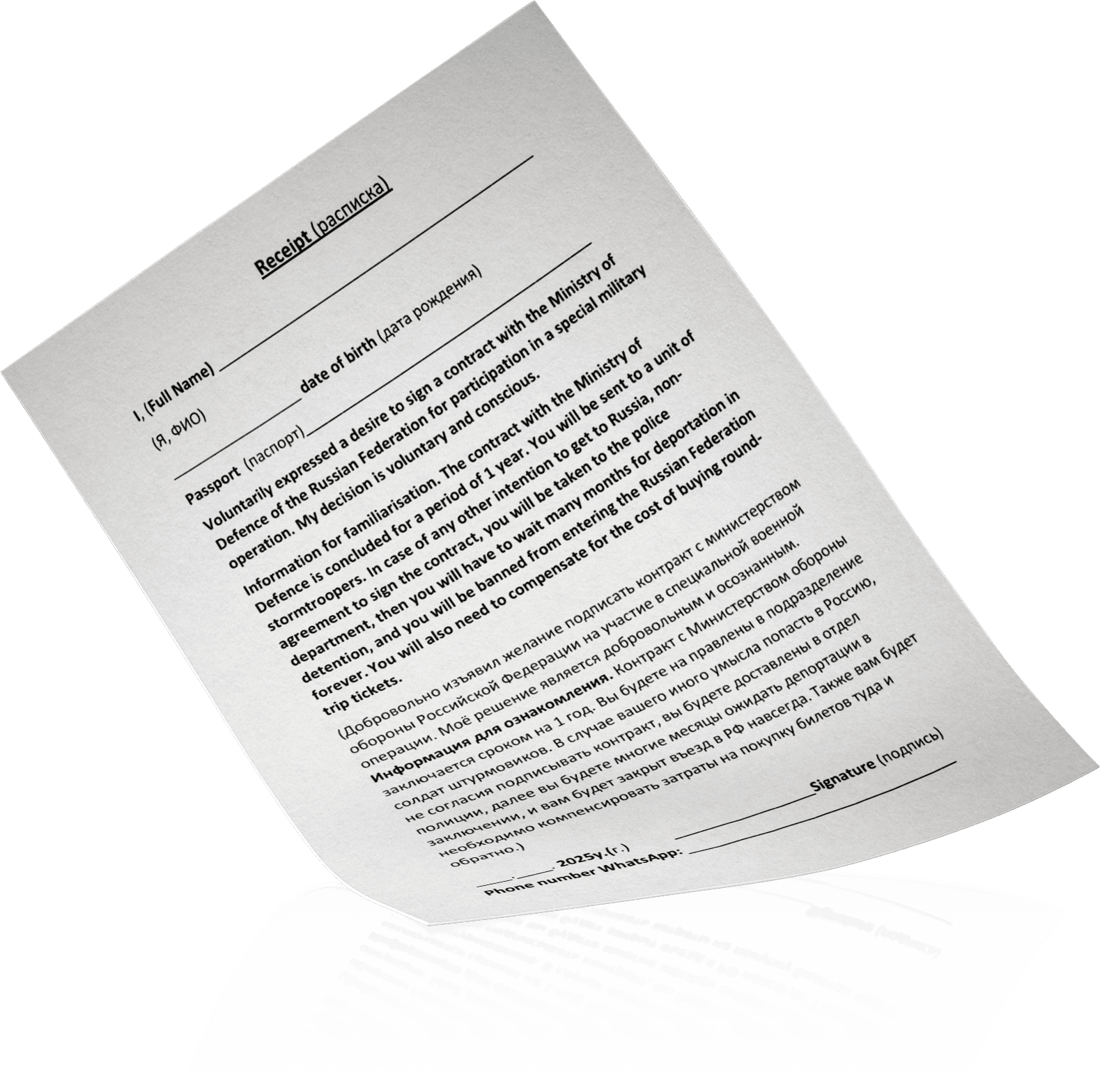
Document of Consent to Join the Military
“Nassar” realized he’d been scammed when a security officer at Queen Alia International Airport stopped him and asked about his final destination. He blurted out, “Moscow,” and handed over a Russian document, saying it was his work permit. The thing is, the officer hadn’t even asked for a permit—just his passport and ticket. Then came the gut punch: the officer glanced at the paper and said, “This is actually a contract for you to join the Russian army.” Mustafa freaked out. He refused to board the plane to Moscow and begged to go back to Egypt instead. The airport security team in Amman agreed and sent him home after some basic checks.
Back in his hometown in Sharqia Governorate, Mustafa marched straight to the broker and demanded his money back. “He took 85,000 pounds from me and promised I’d get a job as a laundry worker, far from any fighting,” he said.
The broker, who helped Nassar travel, works as a lawyer. His office looks like any regular law firm from the outside—no signs, nothing out of the ordinary. But behind those doors, he ran a hidden operation. He used that place to lure people hoping for work or a chance to join the army in Russia, taking advantage of their desperation.
But the lawyer behind the scam refused to return a single pound. When Mustafa threatened to go to the police, the lawyer just sneered, “You’ll never prove anything.” Mustafa pushed harder. He’d lost his old job, racked up debts just to pay the broker, and now he was desperate. Instead of helping, the lawyer started threatening him. In the end, Mustafa had no choice but to ask the authorities for help—hoping they could protect him and maybe get his money back.
Mustafa really lucked out twice. First, he found out the truth before he ever set foot in Russia. Over there, refusing orders or stepping out of line meant you’d probably end up dead—just like Ahmed Ghoneim. Ahmed spoke out of turn to his Russian commander, and they took him away to some unknown place and executed him. Second, Mustafa actually knew the broker who tried to scam him, a guy who didn’t care who he hurt as long as he got paid. That made it way easier for the security services to track the broker down and question him about what he’d done. Meanwhile, dozens of families haven’t been nearly as lucky. Their sons were recruited directly by Polina, and now they can’t reach her at all. They have no idea what happened to their kids, no way to get any compensation, and they’re left scrambling, trying anything they can think of.

Just behind a side door at the Russian Embassy—right on the Nile Corniche in Agouza—families line up, clutching hope. There’s a small opening in the door, barely big enough to see someone’s face. An embassy worker stands there, listening to desperate questions from people who lost all contact with their sons in Ukraine’s war zones. He gives the same short, clipped replies to everyone. Amal came searching for any scrap of news about her son Zein, and Asmahan showed up too, hoping for word about her husband Mohamed Mamdouh, who vanished back in August 2024. The employee just asks for a phone number, some details, maybe a copy of their ID—then shuts the slot, leaving them outside with their worries.
“My husband had been missing for ten months. I had no idea where he was or what was happening to him. I reached out to Polina, hoping she’d tell me something about Mohamed—just anything about how he was doing—but she wouldn’t give me a single answer. All I could do was keep asking at the Russian embassy, hoping someone there might tell me where he was, or at least that he was alive.”
Asmahan, wife of Mohamed Mamdouh
“He used to say, “Don’t worry, Mama. The war’s almost over. There’s nothing left, they’re leaving, and it’s all going to be fine.” May God punish Polina. She’s the reason for all this. She tricked him.”
Amal Emad, mother of Zain
“We don’t know anything about him.” That’s all the embassy employee said to Zain’s mother, just two days after her visit. He promised to call if they learned anything new, but that was it. As for Asmahan, after too many warnings to stop dealing with Polina, she finally reached out to the Russian embassy herself. Not long after, someone from the embassy called her. They told her, “Your husband died in the war. His body is at the hospital.” They asked her to gather some documents, get a visa, travel there for his burial, and collect whatever money he was owed.
Attempts to contact "M-L," an employee of the Russian Embassy in Cairo responsible for liaising with the families of Russian military contractors, to clarify the embassy's involvement in army contracts and the services provided to these families, were unsuccessful. The inquiry also sought a response to allegations made by victims' families against a Russian broker, and clarification regarding the embassy's awareness of Polina's visit to Egypt and her meetings held in Cairo over the course of a week. Similar attempts to reach the Russian Foreign Ministry also yielded no response.
A few hours after Polina's arrest and subsequent interrogation regarding accusations made by Salem's father and uncle—who had alerted the police prior to their meeting at her hotel—she was released upon confirmation of her legal status and valid presence in Cairo. Moreover, the Salem family couldn’t back up their accusations with evidence.
But things look different for the Egyptians—Senousi and Saleh—who are still stuck in Ukrainian custody, along with three others. Their release largely hinges on whether the Egyptian government intervenes. That’s what the Ukrainian coordinator for prisoners of war says, anyway. Basically, these so-called “foreign mercenaries,” Egyptians included, will only get out if their home countries negotiate for them, just like India did for its citizens.
We tried over and over to get a comment from the Egyptian Embassy in Russia and the Egyptian Ministry of Foreign Affairs about what the investigation found. Nobody answered us. Meanwhile, Polina flew back to Moscow. She posted a photo in front of the Giza Pyramids on social media, like a souvenir, and then went right back to recruiting more fighters from Egypt, the Arab world, and beyond.
(*)We used a pseudonym here because the person asked for it, and we changed some details to protect people’s identities.
This investigation was supported by the Pulitzer Center for Journalism.
Investigative report by Sara Abo Shady
Drawing: Sahar Essa
Graphic-Developer: Mostafa Osman